Poor carrier onboarding drives service failures, fraud exposure, and weak scorecards. Learn how to build a carrier onboarding process that protects your network and raises performance.
Carrier onboarding sets the tone for every load that follows.
When onboarding is rushed or inconsistent, problems appear fast. Missed appointments. Bad data. Payment delays. Compliance gaps. Scorecards drop. Trust erodes.
Strong teams treat onboarding as an operational control point. You use it to filter risk, set expectations, and build a clean data foundation.
This guide shows how to structure carrier onboarding so your network performs better from day one.
Why onboarding matters more than ever
Freight markets shift fast. Carriers enter and exit lanes. New operators appear. Fraud risk rises in soft markets. Capacity moves without warning.
If your onboarding relies on email threads and manual checks, risk enters your network before the first tender.
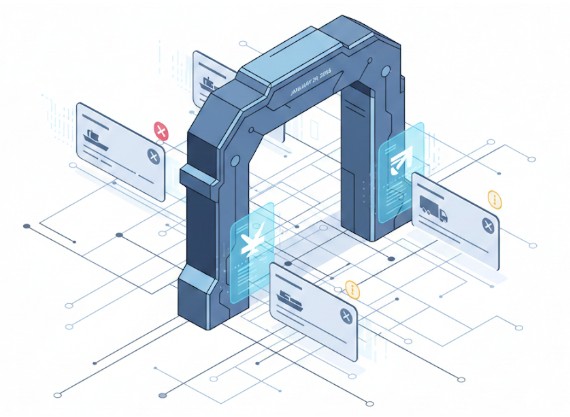
Poor onboarding leads to:
- Delayed pickups from missing insurance
- Billing issues from wrong pay terms
- Tracking gaps from missing contacts
- Service failures from unclear rules
- Higher fraud exposure
Each failure hits your scorecards.
Strong onboarding prevents these outcomes.
Read More: What is a TMS? Key Benefits Explained
What good onboarding achieves
A strong onboarding process does three things:
- Verifies identity and compliance
- Creates clean operational data
- Sets performance expectations
Your goal is not speed alone. Your goal is a carrier that performs inside your network rules.
Design onboarding around operations
Most onboarding focuses on paperwork. Insurance. Authority. W9.
Operations suffer when you stop there.
Every onboarded carrier should leave with:
- Verified identity and authority
- Current insurance on file
- Defined equipment types
- Clear service rules
- Document standards
- Tracking method
- Billing terms

This moves onboarding from admin to execution.
Step 1. Use a single intake path
Scattered intake creates risk.
All carriers should enter through one path. Portal or form. No side deals. No inbox chains.
Your intake should collect:
- Legal name and MC or DOT
- Primary and dispatch contacts
- Equipment types and counts
- Operating regions
- Tracking method
- Payment preference
Store this inside your TMS.
You gain consistency. You remove ambiguity.
Step 2. Automate compliance checks
Manual checks slow teams and introduces error.
Automate:
- Authority status
- Insurance expiration
- Coverage limits
- Watchlist screening
Block activation when a rule fails.
Unqualified carriers never reach your tender pool.
Read More: Smart TMS for Retail: Master First & Last Mile Logistics
Step 3. Define rules upfront
Most carriers fail due to misalignment.
Define rules during onboarding:
- Appointment discipline
- POD timing
- Tracking expectations
- Communication windows
- Accessorial rules
Present these as part of the flow. Require acknowledgment.
Disputes drop. Rework drops.
Step 4. Standardize core data
Bad data creates silent failure.
Standardize:
- Equipment codes
- Driver contact format
- Dispatch email format
- Document types
Every load touches this data.
Clean fields protect execution and billing.
Step 5. Connect onboarding to scorecards
Onboarding should feed performance tracking.
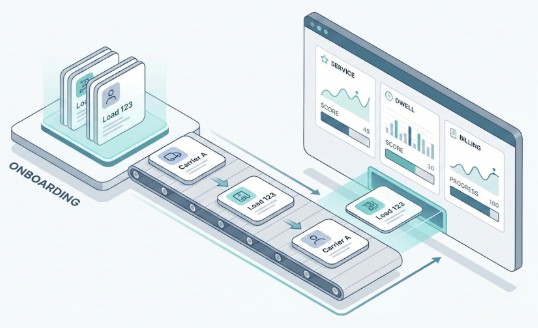
Each carrier record should connect to:
- On time pickup
- On time delivery
- Tender acceptance
- Dwell impact
- Billing accuracy
Scorecards start on load one.
Poor performance surfaces early.
Step 6. Segment carriers at entry
Not every carrier plays the same role.
Segment during onboarding:
- Primary carriers for core lanes
- Backup carriers for surge
- Spot carriers for overflow
- Project carriers for special moves
Apply different rules per segment.
Expectations stay aligned.
Step 7. Close the loop
Onboarding should not end at activation.
After first loads, review:
- Missed steps
- Data errors
- Communication gaps
- Execution issues
Feed this back into the process.
Each failure becomes a rule.
Your onboarding improves over time.
How this improves scorecards
Strong onboarding improves scorecards in three ways:
- Fewer service failures from misalignment
- Cleaner data for tracking and billing
- Faster issue resolution
Carriers enter with clarity. Your team starts with trust.
Scorecards reflect reality, not noise.
Read More: Top Carrier Scorecard Metrics to Improve Performance
What this means for your operation
Every bad load traces back to a decision.
Often, that decision happened at onboarding.
When you tighten this step, you reduce downstream chaos.
You protect service. You protect margin. You protect reputation.
Growth stops hurting.
From friction to control with FTM
Most teams manage onboarding through email, shared drives, and manual checks. That structure forces your team to compensate for broken flow.
FTM turns onboarding into a system.
Carriers enter through one path. Compliance validates automatically. Data flows into execution. Performance ties to scorecards from the first load.
Your team stops chasing documents and starts managing outcomes.
If carrier risk and scorecard performance matter in your operation, onboarding deserves structure.
Book a demo at ftm.cloud and see how carrier onboarding works when it lives inside your TMS.