Imagine a warehouse where products don’t sit on shelves for days waiting to be picked, packed, and moved. Instead, freight is received and whisked right back out to its next destination almost instantly. That’s not just efficient. That’s the power of cross-docking, a logistics operation that minimizes storage time, accelerates throughput, and reduces waste. In 2026, cross-docking is no longer a niche tactic for big box stores. It’s a strategy fleets, carriers, shippers, and brokers are leveraging for faster delivery, lower costs, and stronger visibility.
In this article, we unpack what cross-docking is, how it works, the different types, and why it’s becoming a strategic advantage in modern supply chains.
Cross-docking logistics has become a critical strategy for shippers and carriers facing tighter delivery windows and rising operating costs. By reducing storage time and eliminating unnecessary handling, cross-docking helps freight move through distribution networks faster and with fewer touchpoints. As supply chains become more time-sensitive, companies that understand how cross-docking works gain a measurable advantage in speed, cost control, and inventory visibility.
What Cross-Docking Really Is
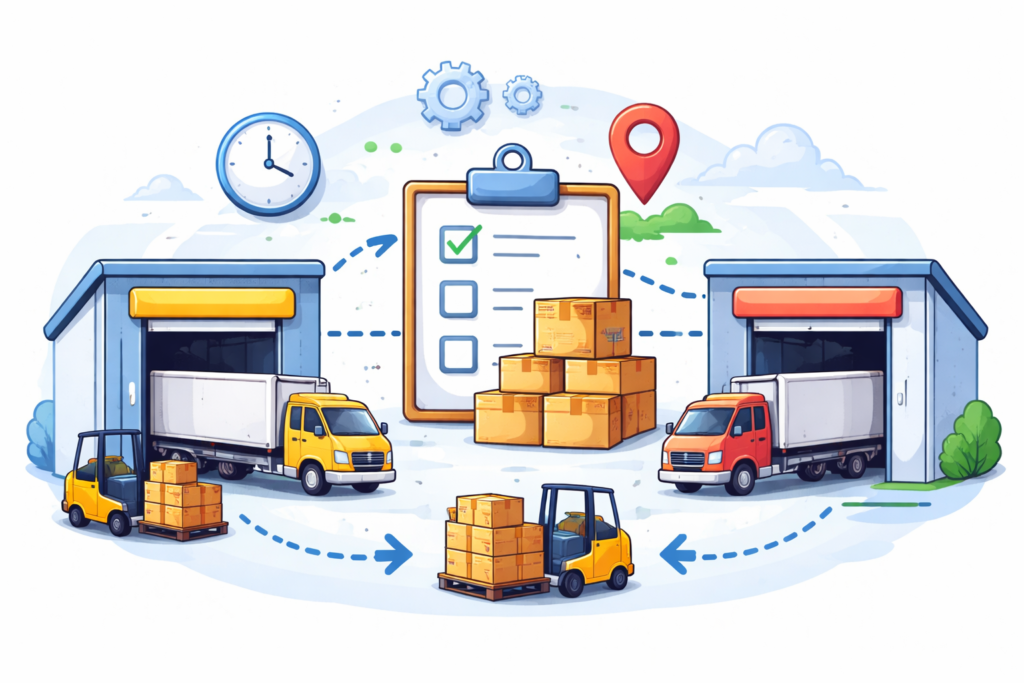
At its simplest, cross-docking is a logistics process in which incoming goods are transferred directly from inbound vehicles to outbound vehicles with little or no storage in between. That means trucks, containers, or trailers off-load products straight onto docks or staging areas where they are sorted, consolidated, and loaded for the next leg of the journey.
This reduces handling, eliminates long-term warehousing costs, and importantly accelerates lead times. Cross-docking is especially useful for time-sensitive freight like perishable goods, retail replenishment, and high-turnover inventory that moves quickly through supply networks.
How Cross-Docking Works in Practice
However, cross-docking is not a universal solution for every supply chain. It works best when shipment volumes are predictable, inbound and outbound schedules are synchronized, and data accuracy is high. Industries handling fast-moving consumer goods, retail replenishment, and time-critical freight benefit most from cross-docking logistics because delays, excess inventory, and manual coordination are minimized at scale.
While the idea sounds simple, successful cross-docking depends on operational coordination, timing, and information flow between carriers, warehouses, and logistics planners. Here’s a practical workflow:
- Inbound Arrival: Goods arrive at the facility, ideally pre-sorted or palletized.
- Staging and Sorting: Products are moved to cross-dock staging zones.
- Verification & Inspection: Teams check quantities, quality, and documents.
- Outbound Consolidation: Freight is grouped by destination or carrier requirements.
- Load Dispatch: Trucks or transport units depart as orders are completed.
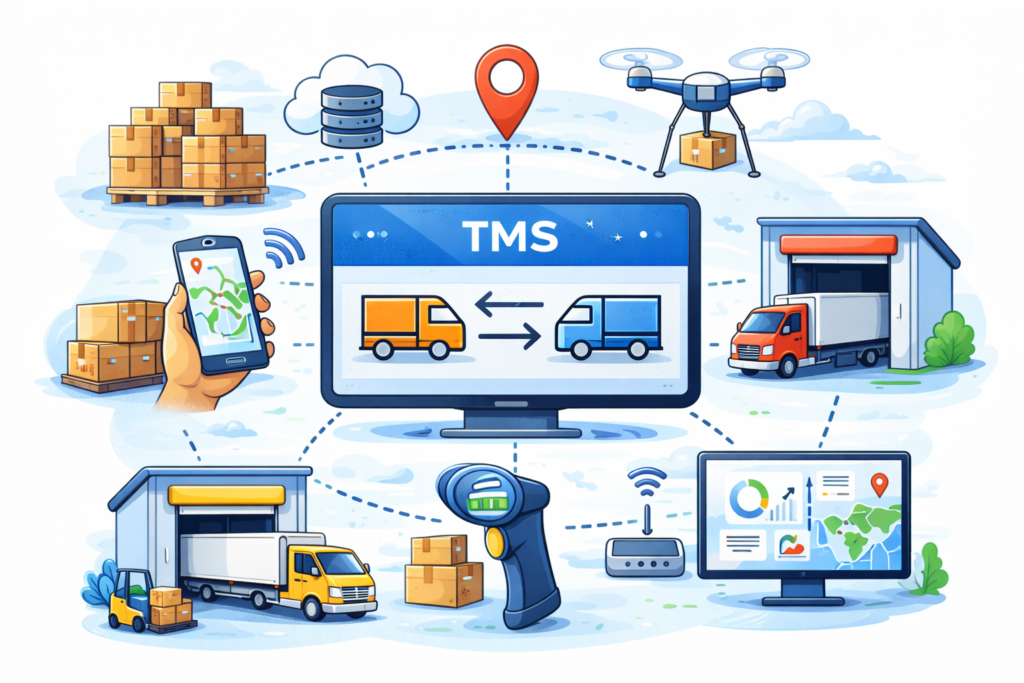
A Transportation Management System (TMS) plays a central role here by coordinating carrier ETAs, optimizing dock assignments, and maintaining real-time visibility of inventory flowing through the dock. Without this digital coordination, cross-docking becomes chaotic instead of efficient.
Primary Benefits of Cross-Docking
Cross-docking isn’t a buzzword; it delivers measurable results:
- Reduced Inventory Holding Costs: With minimal storage time, you avoid long-term warehousing fees and labor costs.
- Faster Delivery Times: Orders move more rapidly through the supply chain.
- Lower Handling Errors: Fewer touchpoints mean fewer mistakes or damage events.
- Improved Carrier Utilization: Trucks spend more time loaded and less time idling.
- Better Customer Experience: Quicker transit often results in happier buyers.
These benefits compound when cross-docking is integrated with real-time visibility and predictive planning tools within your TMS.
Types of Cross-Docking
Not all cross-docking is the same. Understanding the types helps you match the approach to your operational goals:
1. Continuous Flow Cross-Docking
In this model, freight moves from inbound to outbound with little delay. Goods follow a linear path without significant sorting. Perfect for high-volume products or consistent replenishment.
2. Consolidation Cross-Docking
Used when multiple small shipments bound for a common destination arrive at a dock. These loads are consolidated into one larger shipment to improve routing efficiency and reduce transportation costs.
3. Deconsolidation Cross-Docking
Common in distribution centers handling imports or mixed consignments. Larger shipments are broken down into smaller, optimized loads for final delivery or regional distribution.
4. Opportunistic Cross-Docking
Informal or ad-hoc cross-docking used when goods match outbound needs purely by timing or circumstance. It’s less predictable but can utilize idle capacity to clear inventory fast.
Each type has unique requirements for coordination, space, and timing and your choice depends on product velocity, network design, and customer expectations.
Technology’s Role in Cross-Docking
Cross-docking thrives on coordination. Without visibility, timing, and data flow, the process becomes a bottleneck rather than a benefit. A modern TMS helps by:
- Modeling optimal staging and dock assignments
- Coordinating carrier arrival and departure windows
- Providing real-time shipment status and exceptions alerts
- Supporting integration with visibility platforms and mapping tools like Google Maps to calculate real distance and timing
With integrated systems, cross-dock managers no longer guess where a shipment is or when it will arrive, they know, react, and plan accordingly.
Industry Use Cases
Cross-docking is especially powerful in:
- Retail logistics: Frequent replenishment of stores with minimal inventory time.
- Grocery and perishables: Time-sensitive goods that spoil if warehoused.
- E-commerce fulfillment: High volume and rapid turnaround demanded by customers.
- Manufacturing supply chains: Just-in-time parts inventory for assembly lines.
In these scenarios, cross-docking has shifted from a cost-cutting tactic to an operational requirement.
Challenges and How to Address Them
Cross-docking isn’t a plug-and-play strategy. Key challenges include:
- Timing Coordination: Late inbound arrivals disrupt outbound loads.
- Facility Design: Lack of proper dock layout can create congestion.
- Technology Gaps: Siloed systems make real-time coordination impossible.
- Training and Discipline: Staff must be trained to execute precise staging and sorting.
A TMS that integrates inbound visibility, carrier scheduling, and warehouse workflows dramatically reduces these risks.
Cross-Docking vs Traditional Warehousing
Some teams assume cross-docking replaces warehousing entirely. It doesn’t. Rather, it complements warehousing by accelerating certain product flows while reserving storage for slow-moving or seasonal inventory.
In short:
- Warehousing is about storage and order consolidation over time.
- Cross-docking is about immediate flow and sequencing of goods.
For many operations, a hybrid model, part cross-dock, part warehouse, delivers the best balance of cost and responsiveness.
As cross-border and multi-node distribution networks expand, managing cross-docking logistics without centralized technology becomes increasingly risky. Transportation management systems play a key role in coordinating dock schedules, carrier assignments, and real-time freight visibility. Without integrated data and automation, the operational gains of cross-docking can quickly be lost to missed handoffs and execution gaps.
Final Words
Cross-docking, when done right, transforms logistics. It cuts waste, speeds deliveries, and boosts operational sharpness across carriers, warehouses, and entire networks. In 2026, cross-docking isn’t just a tactical choice; it’s a strategic advantage for companies that demand speed and efficiency without excess cost.
If you’re ready to unlock faster flow, deeper visibility, and optimized freight movements, a modern TMS provides the foundation you need.
Want to see cross-docking in action? Book a demo with FTM and discover how integrated workflows can drive smarter logistics.


This really helped me understand the strategic value of cross-docking beyond just speed.