If you want to win more RFPs, you must present yourself not as a vendor, but as part of their supply-chain architecture. That means speaking the language procurement teams care about: data integrity, operational discipline, cost modeling, KPI governance, and cross-functional competence.
Why Most RFP Responses Fail (Even When the Price Is Good)
Procurement teams have seen thousands of RFP submissions.
They can immediately spot copy-paste answers, empty differentiators, or generic talk about “service quality.”
Three things typically kill a bid:
- Lack of operational evidence: claims without data.
- No clear methodology: how you manage exceptions, dwell, surge, compliance.
- Unclear cost structure: no transparency in rate logic, fuel methodology, or lane rationale.
Enterprise procurement is risk-averse. Your submission must remove risk, not add to it.
Position Your Operation Like a Tier-1 Carrier
To win more RFPs, shippers must see that your operation is predictable, measurable, and repeatable.
That requires clarity in four critical areas:
1. Demonstrate Network Fit with Lane Intelligence
Shippers want carriers that understand freight rhythms, seasonality, dwell tendencies, yard constraints, local accessorial patterns, appointment behavior.
Include:
- Historical performance in surrounding markets
- Your density maps near their origin points
- How your capacity behaves in soft vs. tight markets
- Your SLA compliance trend over the past 12 months
This proves you are not guessing, you are matching operational truth to their network structure.
Read More: What Is Predictive Analytics in Logistics: Turning Load History into Actionable Insights
2. Provide a Transparent, Defensible Pricing Methodology
Do not just give numbers. Give logic.
Shippers award to partners whose pricing models survive audits.
A strong pricing approach includes:
- Breakdown of fixed vs. variable cost inputs
- Fuel methodology and adjustment triggers
- Surge pricing rules for seasonal volatility
- Accessorial philosophy and justification
Enterprise shippers don’t chase the lowest number, they chase the most predictable number.

3. Show How You Manage Exceptions: With Process, Not Hope
Most bids lose because they rely on vague statements like “We provide proactive communication.”
That means nothing.
Instead, document your exception architecture:
- Escalation ladder (minutes, ownership, thresholds)
- Root-cause-analysis cadence
- Data reconciliation cycles
- Real numbers: average resolution times, average dwell reductions, % of ETAs met
Shippers want preventative mechanisms, not reactive ones.
Read More: TMS for Shippers: Top Features for Load Visibility
Your RFP Narrative: The Professional Way to Differentiate
Your narrative should answer three questions procurement will never ask directly but always evaluate:
- Can you handle volatility without destabilizing our network?
- Is your operation consistent enough to scale?
- Do you understand the complexity of our freight, not just freight in general?
To meet those expectations, include:
- Your surge execution plan (holidays, quarter-ends, produce seasons)
- Your subcontractor governance standards (if applicable)
- Your access to supplemental capacity when demand spikes
- Historical examples of how you stabilized other enterprise freight
This is where competitors fall apart, procurement teams reject any bid that smells like improvisation.
Leverage Scorecard Strength to Influence the Award Decision
If you operate with mid-size or enterprise shippers already, scorecard performance is your strongest weapon.
Highlight:
- Tender acceptance rate stability
- Pickup accuracy vs. appointment windows
- Dwell reduction initiatives
- Your variance band on on-time pickup/delivery
- Load-to-driver assignment accuracy inside your TMS
Strong scorecards reduce a shipper’s perceived risk, and enterprise procurement always awards to the least risky, not the cheapest.
Read More: Top Carrier Scorecard Metrics to Boost Service Quality & Win More Shipper Bids
Lean Into Technology, But Avoid Tech Buzzwords
This is where brokers often lose credibility by overselling.
Shippers don’t want to hear “we have visibility automation.” Everyone does.
Instead, emphasize how your technology improves compliance, reduces variance, and supports their KPIs.
Examples of relevant specifics:
- How your TMS prevents mismatched tender data
- How your dispatch workflow eliminates load confirmation defects
- How your ETA model recalibrates during route constraints
- How your documentation process maintains audit integrity
This is the difference between sounding modern and sounding empty.
Bringing FTM Into the RFP Strategy
When positioning your operation professionally, a critical differentiator is the maturity of your data and process control.
This is where FTM strengthens your bid without sounding like marketing fluff.
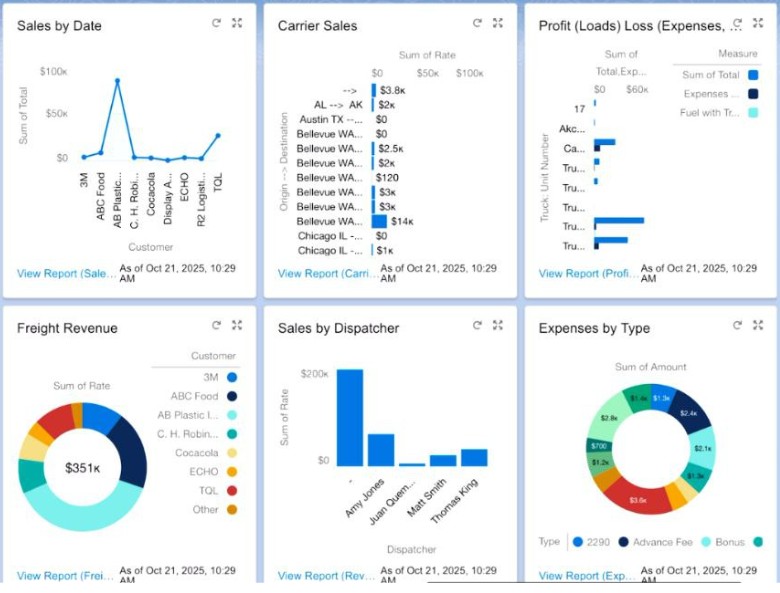
FTM supports RFP competitiveness by:
- Providing historical performance exports for RFP inclusion
- Structuring exception workflows that shippers value
- Improving lane-level predictability with load history modeling
- Ensuring documentation, traceability, and SLA governance
Enterprise shippers reward operational discipline.
FTM helps you prove that discipline with numbers, process, and audit-ready evidence, the exact things procurement teams want.
RFPs Aren’t Won by Price, They’re Won by Professionalism
To win more RFPs, you don’t need to out-promise competitors, you need to out-prove them.
Your submission must show:
- methodological pricing
- operational maturity
- strong scorecard governance
- network-fit intelligence
- clear exception management
This is the language enterprise shippers respect.
And if you pair those strengths with the process discipline that tools like FTM enable, you position yourself not as a vendor, but as a strategic, long-term partner worth awarding.
Book a Free Demo of FTM now and learn how it can help you streamline your freight operations.