When you look at a truck lineup, it’s easy to see tractors, trailers, and engines, but what you can’t see are the hidden costs that quietly drain profit year after year. Fuel, repairs, downtime, insurance, depreciation, driver turnover… the list goes on. If you only watch acquisition price and monthly payments, you’re ignoring most of what actually makes fleets expensive.
On this page
In reality, the total cost of ownership (TCO) tells a far more accurate story about profitability, efficiency, and long-term sustainability. Companies that understand TCO not just as an accounting metric but as a strategic lever outperform peers on uptime, margins, and customer satisfaction.
This article breaks down how to manage TCO for your vehicle fleet, with actionable tactics, technology roles, and operational choices that matter most in 2026.
What Total Cost of Ownership Really Measures
Total cost of ownership for a fleet goes far beyond purchase price. It includes:
- Depreciation and financing costs
- Fuel and energy expenses
- Insurance and risk premiums
- Maintenance and repair costs
- Driver labor and turnover impact
- Compliance and fines
- Downtime and utilization losses
By tracking fleet TCO holistically, you see not what happened last month but what decisions today will cost you next quarter. When you optimize TCO, you aren’t just cutting costs; you’re improving predictability and resilience, especially in volatile markets where fuel price swings or labor shortages can tip the balance.
Why TCO Matters More in 2026
With rising expectations around delivery speed, sustainability mandates, and digital native buyers, fleets are being asked to do more at lower cost with fewer surprises. Spot rates fluctuate, labor markets tighten, and compliance expectations grow. In that environment, TCO becomes a strategic lens, not a bookkeeping exercise.
Companies that ignore TCO often see short-term gains (lower acquisition cost, cheaper tires) but experience long-term pain (higher downtime, faster depreciation, unpredictable repairs). Leaders treat TCO as a performance metric tied to strategic goals, not a static ledger number.
Optimizing fleet TCO is not only about reducing today’s expenses but about building a cost model that survives market shifts. Fuel volatility, regulatory pressure, and equipment shortages all compound over time. Therefore, fleet managers who model total cost scenarios across multiple years gain a strategic advantage. By forecasting how maintenance cycles, depreciation curves, and utilization rates interact, organizations can make asset decisions that protect margins even when external conditions change.
Start With Accurate Data: The Foundation of Effective TCO Optimization
You can’t improve what you don’t measure. The first step toward optimizing total cost of ownership is clean, integrated data.
A modern TMS that includes fleet telematics and vehicle performance data becomes a centralized hub for TCO analysis. It captures:
- Real-time fuel usage
- Idle and dwell time
- Brake wear and engine health
- Route efficiency metrics
- Driver behavior patterns
When this data flows directly into analytics dashboards (instead of stale spreadsheets), you start seeing cost drivers that were previously invisible.
Fleet TCO optimization improves significantly when operational data flows through a single system of record. When telematics, routing, maintenance, and cost data remain disconnected, teams react instead of planning. However, when these inputs are unified, patterns emerge quickly. This allows fleet leaders to identify underperforming assets, inefficient routes, and cost anomalies before they escalate into long term financial drag.
Reduce Fuel Costs with Smarter Routing and Behavior Tracking
Fuel is one of the largest variable costs in any vehicle fleet. Optimizing it has immediate bottom-line impact.
Fuel strategies that reduce TCO include:
- Route optimization to cut unnecessary miles
- Monitoring idle time and penalizing wasteful idling
- Encouraging eco-driving via behavior incentives
- Selecting fuel-efficient vehicles based on historical use
A TMS that integrates telematics and route planning helps reduce both deadheading and unnecessary acceleration/braking that gnaws fuel efficiency.
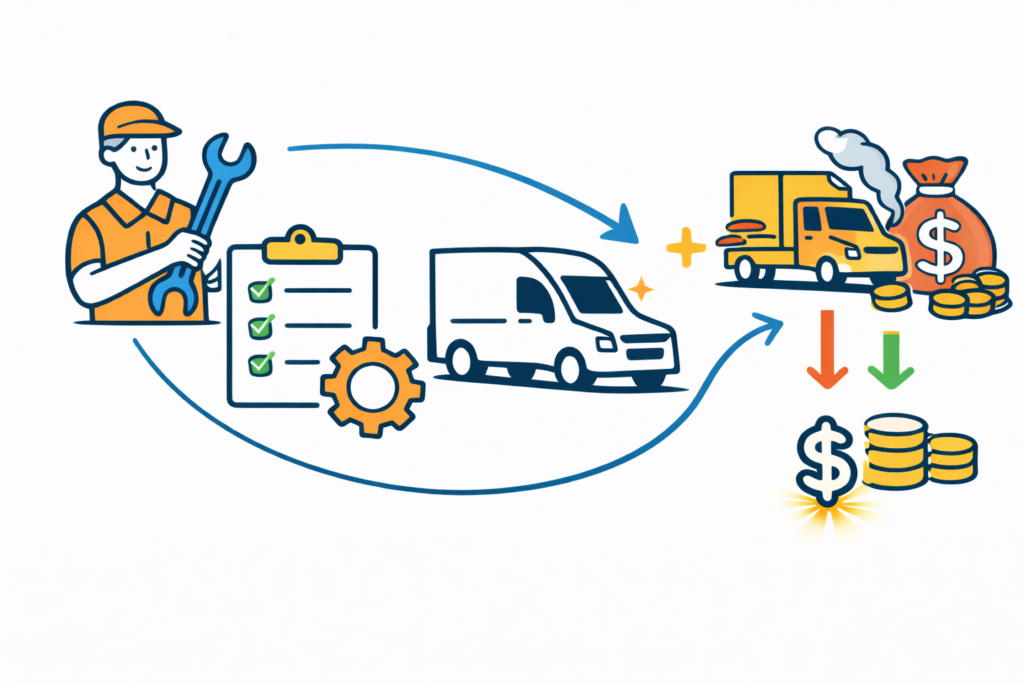
Preventative Maintenance Cuts Major Repair Costs
Reactive maintenance kills margins.
Big repair bills usually start as small problems that went unnoticed. Predictive and preventative strategies, backed by telematics and automated maintenance triggers, keep breakdowns rare and predictable.
Top fleet teams use:
- Scheduled maintenance alerts
- Mileage-based service triggers
- Diagnostic fault reporting from on-board systems
This not only extends vehicle life, it also minimizes downtime, which is itself a hidden cost of ownership.
Manage Depreciation With Life-Cycle Planning
Depreciation is a quiet cost that’s easy to overlook.
Instead of thinking “buy and hold forever,” optimized fleets treat assets as life-cycle investments. They analyze:
- Optimal replacement windows
- Trade-in value trends
- Cost per mile relative to resale value
If older units cost more to maintain than they save in depreciation, selling earlier can improve overall TCO.
Insurance, Risk, and Compliance: Don’t Let Costs Drift
Insurance premiums, liability exposure, and compliance fines can balloon unexpectedly.
Smart fleets:
- Compare carriers annually
- Use telematics to lower premiums via safe driving scores
- Monitor compliance status centrally
- Automate driver hours and ELD logs
This proactive stance keeps risk costs predictable, instead of dumped on operations after the fact.
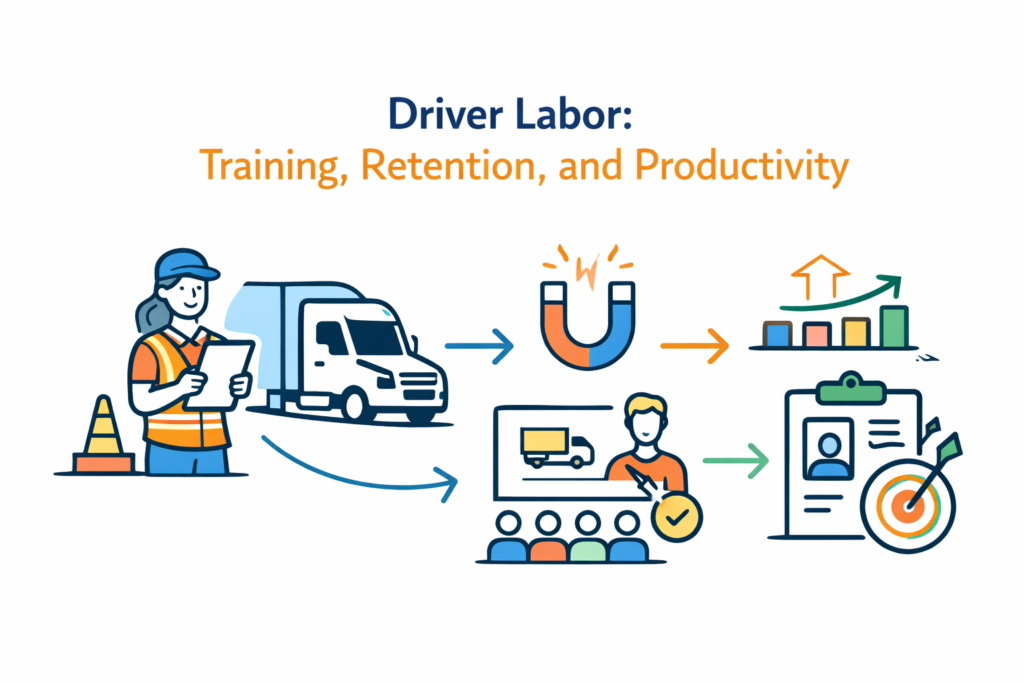
Driver Labor: Training, Retention, and Productivity
Driver pay and turnover are major TCO drivers.
Investing in training, retention incentives, and scheduling flexibility boosts utilization and cuts recruitment costs. Turnover isn’t just recruitment cost, it’s knowledge loss, customer disruption, and productivity impact.
Tracking driver productivity inside a TMS also reveals performance opportunities and supports reward systems, all of which lower TCO.
Use Fleet Scorecards To Guide Decisions
Scorecards track KPIs that matter in real time. They convert raw data into decision signals.
Key metrics that directly influence TCO include:
- Cost per mile
- Fuel efficiency
- Maintenance frequency
- Idle time
- Route efficiency
- Driver utilization
Regular review (weekly or monthly) keeps teams aligned with goals instead of guessing.
Forecast, Simulate, and Plan With Predictive Analytics
Static dashboards don’t cut it in volatile markets.
Top fleets use predictive analytics to test “what-if” scenarios:
- What if fuel climbs 30%?
- What if one major lane goes offline?
- What if a new compliance rule arrives?
Simulating outcomes helps managers make resilient decisions that keep TCO in check.
Partner with Vendors That Support Long-Term Value
Selecting vendors (vehicle makers, insurers, telematic providers) based on low upfront cost often backfires.
Instead, evaluate partners on how they contribute to TCO over time:
- Reliability history
- Service responsiveness
- Integration with your systems
A partner that refuses to integrate or constantly bills for add-ons is costing you more than you realize.
The Role of Technology: More Than Just Tools
Technology doesn’t fix TCO automatically. It amplifies process discipline.
A tightly integrated TMS + telematics + analytics stack gives you:
- Clean end-to-end data
- Fewer manual handoffs
- Faster insights
- Better decisions
Disconnected tools slow reaction, hide costs, and inflate TCO quietly.
As fleets scale, total cost of ownership becomes a leadership level concern rather than an operational detail. Executives increasingly evaluate fleet performance based on cost predictability, risk exposure, and capital efficiency. Consequently, organizations that treat fleet TCO optimization as a continuous process gain stronger financial control, faster decision making, and clearer justification for technology investment.
Final Words
Optimizing the total cost of ownership for your vehicle fleet is not a single project, it is an ongoing discipline. When you understand where your money actually goes and tie it to data, accountability, and strategic decision-making, you improve performance and protect margins in a world where cost structures shift fast.
If your current systems rely on fragmented data and manual reconciliation, it’s time to think differently.
Book a demo with FTM to see how integrated fleet data, visibility, and analytics can reduce your TCO and improve operational performance.
