Is AI replacing load planners in logistics? It’s a question that’s sparking debate across dispatch offices. While artificial intelligence (AI) is transforming the freight industry, human dispatchers are still very much essential. In fact, AI and dispatchers can work hand-in-hand to optimize load planning, making the process faster, more accurate, and scalable.
Let’s dive into AI’s role in load planning, why dispatchers are still indispensable, and how the future of logistics is all about partnership, not replacement.
The Rise of AI in Load Planning: The Future of Freight Management
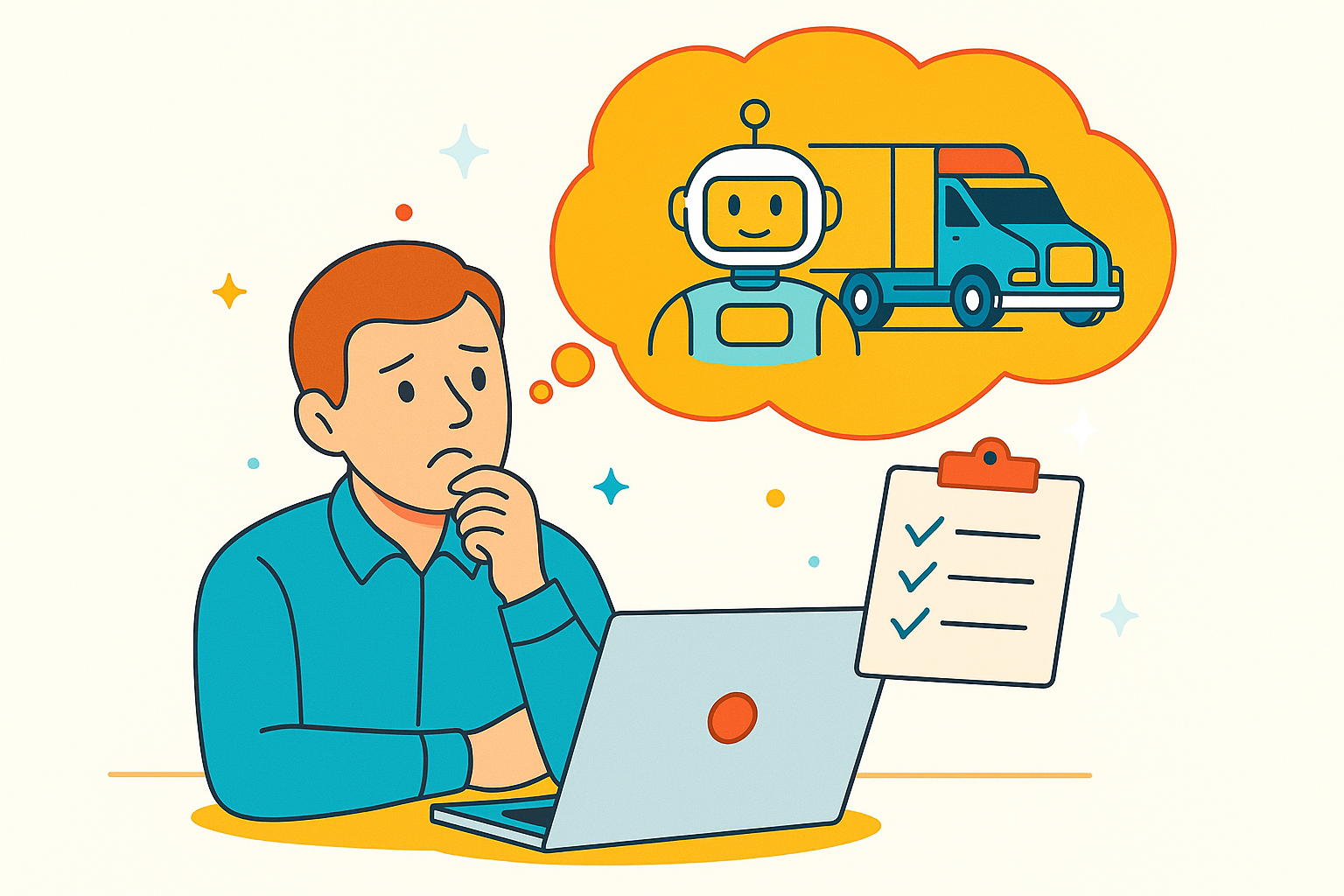
Over the past decade, AI-driven technology has revolutionized the logistics and transportation industry. Today’s AI-powered load planning software offers real-time route optimization, capacity forecasting, and even predictive maintenance alerts. These advanced tools process huge volumes of data in seconds, making traditionally tedious tasks—like matching trucks to loads or updating schedules—easier and faster.
However, AI doesn’t replace human expertise. Rather, it serves as a powerful tool that enhances decision-making and reduces costly errors. By automating routine tasks, AI allows dispatchers to focus on more strategic responsibilities.
Why Dispatchers Are Still Essential in the AI Era
Even with the latest AI innovations, dispatchers remain crucial for several reasons:
1. Human Intuition and Problem-Solving
While AI excels at processing data, it can’t replace the human intuition needed to navigate complex, unpredictable scenarios. Sudden weather changes, last-minute driver issues, or customer disputes require human decision-making that algorithms can’t foresee.
2. Relationship Management
Dispatchers don’t just manage freight, they manage relationships with drivers, brokers, and shippers. They’re the ones who resolve conflicts, smooth over issues, and keep operations running when AI can’t solve every problem.
3. Strategic Oversight
AI handles repetitive tasks, but dispatchers steer the logistics business through daily complexities. They use AI insights to make data-driven decisions, while also managing the real-world challenges that come with every load.
Key Benefits of AI-Powered Load Planning for Dispatchers
AI isn’t here to replace dispatchers, it’s here to empower them. By leveraging AI-powered tools, dispatchers can unlock several key benefits:
1. Faster Decision-Making
AI analyzes routes and load options in real-time, providing dispatchers with instant, actionable insights to speed up decision-making.
2. Greater Accuracy
Predictive analytics help reduce costly mistakes by forecasting potential disruptions and optimizing routing. This leads to fewer delays and better customer satisfaction.
3. Improved Driver Satisfaction
AI reduces empty miles, optimizes delivery schedules, and helps dispatchers create smarter plans that keep drivers satisfied.
4. Scalability
AI helps dispatchers manage larger volumes without increasing workload, allowing for better scalability across growing operations.
5. Real-Time Adjustments
AI makes it easier to handle unexpected disruptions, like traffic or last-minute delays, by offering real-time updates and quick adjustments.
Where AI Still Fails: The Blind Spots Only Dispatchers Can Solve
AI in load planning has made massive progress, but logistics isn’t a controlled environment, it’s a high-variability system full of exceptions. And exceptions are where dispatchers prove irreplaceable. Here are the blind spots that AI still can’t fully solve:
1. Ambiguous or Low-Quality Data
When customer addresses are incomplete
When weight or commodity info is wrong
When time windows contradict prior agreements
→ AI can only work with what it’s fed. Dispatchers can spot inconsistencies instantly because they’ve seen the pattern before.
2. Non-Quantifiable Customer Requirements
AI can’t fully understand:
- “This consignee gets angry if you miss the 30-minute window.”
- “This shipper always loads slowly on Mondays.”
- “This driver refuses this customer unless the appointment is after 10 AM.”
These nuances drive real-world scheduling, and only dispatchers know them.

3. Real-Time Driver Situational Awareness
A driver feeling fatigued
A reefer unit starting to act irregular
A truck stop being unexpectedly full
→ AI can’t detect these cues unless manually reported. Dispatchers interpret them instantly and adjust the plan safely.
4. Ethical & Prioritized Decision-Making
AI may recommend the “optimal route,” but dispatchers understand when it’s worth:
- Prioritizing a loyal customer
- Protecting a driver relationship
- Avoiding risks that don’t appear in data models
Human oversight creates operational stability, something AI can’t replace.
The Future of Load Planning: AI + Dispatcher Collaboration
So, is AI replacing load planners? The short answer is no, and most likely, it never will. While AI handles data-heavy tasks, dispatchers still play a critical role in managing the complexity of logistics operations.
Think of AI as a co-pilot for dispatchers. AI handles the number-crunching, while dispatchers use their experience and judgment to solve real-world issues and guide the business through every challenge.
Dispatchers who embrace AI can combine human judgment with machine intelligence, leading to faster decisions, fewer errors, and better operational performance. It’s a partnership, not a competition
The Path Forward in AI-Powered Load Planning
The logistics industry is constantly evolving, and the rise of AI is shaping the future of load planning. By integrating AI-driven load planning software, dispatchers can increase efficiency, reduce costs, and improve driver satisfaction. However, human expertise will always be essential to manage the complexities of the freight world.
Adapt or fall behind. Dispatchers who embrace AI can stay ahead of the curve, while those who resist may struggle to remain competitive in an increasingly automated industry.
Read more: What Is the Role of AI in Cargo Load Optimization?
Future-Proof Your Logistics with FTM
If your company is looking to integrate AI-driven load planning, now is the time to make the leap. FTM’s TMS helps you integrate advanced AI with your dispatch strategy, streamlining operations and improving overall efficiency.
Contact FTM today to see how we can help you embrace AI for smarter load planning and a more efficient logistics operation. Explore our demo and get started today!