On-time delivery has become the anchor of logistics performance. Customers, internal teams, and finance all judge your execution by it.
Late delivery is not a single failure. It is a series of small process breaks that add up. Modern transportation management systems (TMS) improve on-time delivery by preventing those breaks before they affect the customer. A TMS brings structure, data, and automation to decisions that used to be manual and reactive.
On-Time Delivery Begins with Data Discipline
TMS platforms consolidate information from across planning, execution, and tracking. With clean, consistent data:
- Carrier performance history becomes visible
- Transit times are based on reality, not memory
- Exceptions surface early, not after the fact
Real-time tracking and visibility are core enablers. When the system automatically integrates carrier telematics and GPS, planners see delays before customers call, and the team acts earlier.
By reducing reliance on spreadsheets, email threads, and tribal knowledge, teams eliminate the data gaps that cause most late deliveries.
Read more: What is a TMS? Key Benefits Explained
Intelligent Planning and Route Optimization
Modern TMS solutions use algorithms to optimize routes based on multiple variables such as traffic patterns, distances, and delivery windows. Compared with static routes based on habit, optimized plans reduce variability and transit time.
Route optimization reduces the number of unnecessary miles, lowers risk of bottlenecks, and aligns delivery schedules with real road conditions. This has the direct effect of improving delivery predictability and reducing late arrivals.
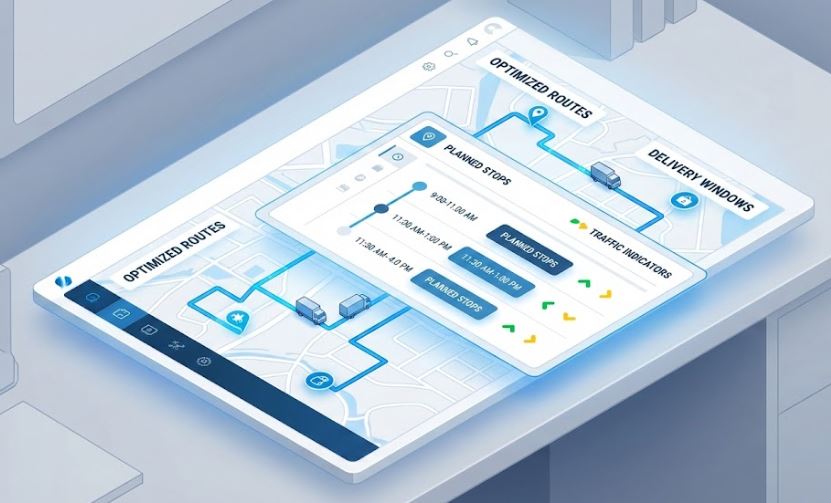
Successful logistics teams treat routing and scheduling as dynamic, not fixed. Using a TMS this way cuts indirect delays that typically go unnoticed until too late.
Exception Management Must Be Part of the Flow
Late delivery is rarely a surprise. It usually shows signals hours or days before a customer feels the impact.
When a shipment falls behind schedule, a TMS:
- Flags the issue automatically
- Routes the alert to the right operator
- Suggests alternate plans or carriers
- Updates stakeholder communication
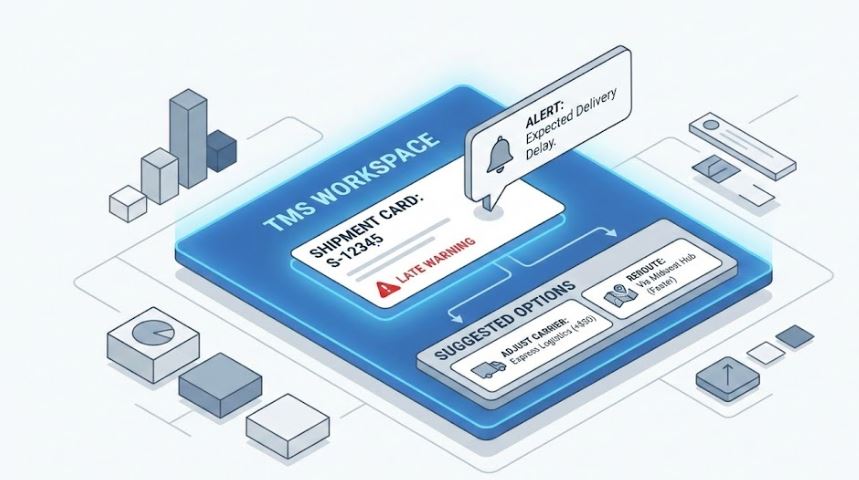
In a manual process, these signals would either be missed or surfaced by phone calls and inboxes, costing hours of reaction time. With automated exception workflows, teams act before the delivery window fails.
Scheduling and Appointments Matter
Many delivery failures come from simple calendar conflicts:
- Dock not available at the expected time
- Customer changes window after tender
- Multi-stop routes create cascading delays
A TMS manages facility calendars, appointment constraints, and driver ETAs in one place. This reduces scheduling conflict, supports lane planning, and improves predictability.
When delivery windows align with execution plans, failure risk drops.
Carrier Performance Becomes a Decision Factor
TMS platforms do more than assign loads. They record outcomes and make carrier behavior part of the next tender decision. Modern systems track:
- On-time pickup percentages
- On-time delivery rates
- Exception frequency
- Transit variance vs expectations
Shippers and logistics teams stop guessing which partners will perform. They choose carriers based on data and historical outcomes. This shifts execution from reactive to consistent, and improves delivery reliability over time.
Read more: Carrier Portal for Faster Freight Operations
Visibility and Transparency Reinforce Execution
On-time delivery is a product of clarity, not hope.
A TMS integrates visibility into the core workflow so:
- Planners see deviations as they develop
- Customer service teams give accurate updates
- Field teams get alerts tied to their tasks
This unified view of status reduces the number of late deliveries that come from information lag. It aligns every team around the same live data set instead of disconnected portals.
Early Measurement Drives Continuous Improvement
If you do not measure delivery outcomes, you do not improve them.
Modern TMS platforms offer dashboards and analytics that track:
- On-time delivery rates by lane
- Variation in transit times
- Trends in carrier reliability
- Correlation of cost vs performance
These insights often show specific areas to improve. For example, if certain corridors show recurring late shipments, teams can adjust carrier assignment, change routing rules, or redefine service expectations.
Data-driven (change) is the difference between occasional success and consistent performance.
Integration with Other Systems Strengthens Outcomes
A TMS does not operate in isolation. Integration with:
- WMS (warehouse management systems)
- ERP (enterprise resource planning)
- Carrier systems via APIs
- Telematics and ELD systems
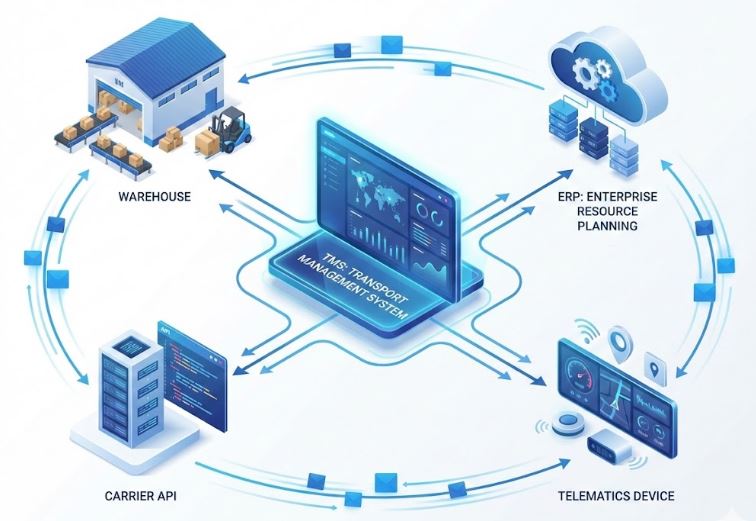
creates a unified operational ecosystem. This allows the TMS to pull confirmed inventory availability, coordinate load readiness, and anticipate bottlenecks.
Integrated systems accelerate response and improve accuracy, which is critical for on-time delivery.
People Still Drive Execution
Technology supports delivery, but people still make the final decisions. A TMS improves delivery outcomes because it:
- Takes manual work out of repetitive tasks
- Surfaces problems early
- Provides reliable data for decisions
- Reduces distractions so teams focus on exceptions
When planners spend more time on decision making and less on information gathering, delivery performance becomes predictable instead of guesswork.
Read more: AI-Powered TMS and the Future of Supply Chain Management
What This Means for Your Operations
Improved on-time delivery is not a simple outcome. It is the result of many small improvements happening together:
- Better routing and scheduling
- Real-time alerts and visibility
- Data-based carrier decisions
- Seamless integration with execution systems
- Measurement and continuous improvement
A TMS is the backbone that connects these elements.
From Execution to Consistency with FTM
Teams that rely on manual processes often react to late delivery instead of preventing it. FTM combines planning, execution, visibility, and analytics into one platform. This allows teams to plan smarter, spot exceptions earlier, and improve delivery performance incrementally.
If on-time delivery is a priority for your business, explore how FTM helps you connect all pieces of execution into one flow.
Book a free demo at FTM