Most TMS buying conversations start the same way: rating, tendering, tracking, documents, billing.
On this page
Then reality hits.
Your “TMS project” is not a TMS project. It’s an integration project with a TMS sitting in the middle.
Buyers are learning this the hard way because logistics operations are now built on stacks, not single systems. Visibility platforms plug into TMS and telematics networks. Finance teams need clean handoffs into ERP and accounting. Warehouses need shipping execution to line up with docks, appointments, and inventory moves. And customers expect updates that match what is happening in the field.
That is why integration is rising to the top. Not because it is trendy. Because without it, you end up with another silo.
The new baseline: a TMS must work with your ecosystem
A modern TMS is expected to support planning and execution across transport modes and regions, but buyers also expect it to connect to everything around it.
The most common “must connect” list looks like this:
- ERP and accounting (invoicing, cost allocation, accruals)
- WMS and OMS (order release, pick/pack status, dock schedule alignment)
- Real-time visibility and telematics (ELD, GPS pings, milestones)
- Carrier connectivity (tenders, status updates, documents, invoices)
- Customer and carrier portals (self-service tracking, PODs, appointments)
Visibility vendors themselves now position “TMS + visibility” as a combined capability because execution decisions get stronger when tracking data is inside the same workflow.
So when buyers ask “does it integrate,” they are not asking for a checkbox. They are asking if the TMS can become the operational backbone.
Read more: This Year Is Full of TMS Automation
What changed: speed and trust now matter as much as cost
Integration used to be framed as “nice to have.” Now it is directly tied to service and margin.
Here is what changed in the market:
1) Real-time is becoming the expected operating rhythm
APIs can move data in milliseconds. That matters when your team is reacting to late departures, missed appointments, and exceptions. It also matters when customers want accurate ETAs that update quickly.
2) Vendor ecosystems are consolidating
TMS vendor consolidation has been pushing shippers to rethink procurement strategy, partly because lock-in risk increases and integration paths change after acquisitions.
3) Integration has become a competitive advantage
Even the B2B connectivity space is evolving around “faster onboarding, secure exchange, and scalable integration,” because companies are tired of brittle connections and manual workarounds.

Integration is where TMS implementations win or fail
If you want a quick way to judge a TMS deal, ask this:
“How many weeks after go-live will we still be exporting spreadsheets to make the business run?”
If the answer is “we will always export,” your integration plan is already failing.
The most common failure patterns I see in TMS implementations look like this:
- Carrier onboarding stalls because each carrier needs a custom setup
- Tracking lives elsewhere so planners cannot act in the same screen where they manage loads
- Finance does not trust the numbers because invoices do not tie cleanly back to shipment events
- Operations runs parallel processes because WMS and TMS do not stay in sync
That is why buyers are prioritizing API-first approaches and evaluating integration capability early.
Read more: What You Should Expect From Your TMS in 2026
API vs EDI vs hybrid: what buyers are really choosing
This is not a religious debate. It is operational fit.
- EDI is still common for high-volume, standardized transactions, especially with large carriers and legacy networks.
- APIs support real-time updates and modern workflows.
- Hybrid is normal: EDI for some trading partners, APIs for new services and internal systems.
Procurement frameworks are increasingly explicit about this choice because the integration method changes how quickly you can respond and how much you can automate.
A practical way to score a TMS on integration
Instead of asking “does it have integrations,” score it on how integration behaves in real life.
Here is a simple maturity table you can use in your evaluation.
| Integration maturity | What it looks like day to day | Risk |
| Level 1: File passing | CSV exports, nightly batches, manual uploads | Slow decisions, frequent mismatch |
| Level 2: Basic connectors | Some standard connections, limited flexibility | Breaks when workflows change |
| Level 3: API-first | Real-time order, load, tracking, billing events available by API | Requires governance, but scales |
| Level 4: Event-driven | Webhooks, alerts, automated exceptions across tools | Best for high-velocity ops |
If you run appointment-heavy freight, exception-heavy freight, or customer-driven freight, you will feel the difference between nightly sync and real-time event flows immediately.
Read more: How to Reduce Freight Costs Without Sacrificing Service Quality
The questions smart buyers ask in the RFP
These are better than generic “do you integrate with X.”
- How long does a new carrier onboarding take, end to end?
And what part is still manual? - Do you support webhooks or event notifications?
Or do we poll for updates? - What is your data model for stops, milestones, documents, and invoice lines?
This decides whether finance reconciliation is clean. - How do you handle identity and access across portals and integrations?
Security is part of integration, not separate. - Show us a real integration in production.
Not a slide. A working flow.
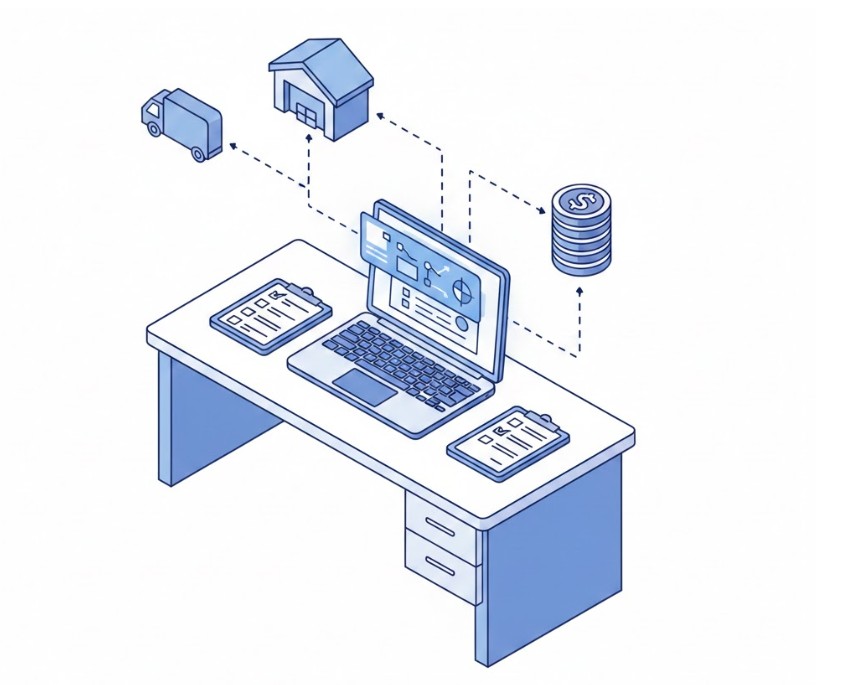
Also, pay attention to vendors that emphasize “single source of truth” and cross-system coordination. That language is showing up because siloed tools have become a failed investment pattern.
Where FTM fits
If integration is the priority, you want a TMS that is built to connect, not one that treats integration as an afterthought.
FTM already supports a wide range of integrations across these categories, covering finance, tracking, load sourcing, routing, and external platforms. You can see the full, current list here.
The important point is not the number of logos. It is whether the TMS can support real workflows across systems without forcing teams back into spreadsheets or manual handoffs.
FTM is Salesforce-native, which helps in security, data governance, and extensibility. And it is designed to operate as aconnected system across
load management, portals, workflows, tariffs, and finance so your team is not forced back into spreadsheets after go-live.
If you want, share your current stack (ERP, WMS, visibility, accounting, carrier mix). We will map the integration paths and the biggest risks, then show what a clean rollout looks like inside FTM.
Book a quick demo with the FTM team at and bring your real workflows and partners.
