A driver picks up a load at 7am. By 9am, a dispatcher calls to ask where they are. The driver answers while merging onto the interstate. By noon, another call. By 3pm, a third. The driver delivers the load, sends a quick confirmation, and mentally notes this broker before accepting the next tender offer. Not in a good way.
On this page
This is the quiet damage that manual load tracking does to carrier relationships every day, on every load, across every check-call operation in the industry. It is not dramatic. Nobody files a complaint. The carrier just gets a little less enthusiastic about your freight the next time capacity is tight. And at some point, they stop answering your tenders first. Or at all.
The freight industry has normalized check calls to the point where most operations do not even question them. But normalization is not the same as good practice. Check calls are a symptom of a tracking system that does not work without human intervention, and the cost of that dependency is not just dispatcher time. It is the carrier goodwill that gets spent every time a driver’s phone rings mid-drive for a status update that an ELD could have provided automatically.
Manual load tracking through check calls damages carrier relationships by repeatedly interrupting drivers during transit for status updates that automated tracking tools provide automatically. Each unnecessary call adds operational friction to the carrier relationship. Over time, carriers deprioritize brokers who check-call frequently, resulting in slower tender acceptance, higher quoted rates, and reduced capacity access precisely when market conditions tighten.
What a Check Call Actually Costs the Carrier
Before talking about what manual load tracking costs the broker, it is worth being specific about what it costs the person on the other end of the phone. A driver navigating a highway interchange at 65 miles per hour who has to answer a check-call is not just annoyed. They are distracted. That call represents real safety risk, real liability exposure, and real friction in a job that is already demanding.
For a carrier dispatcher managing eight or twelve drivers, the incoming check-call volume from multiple brokers represents a meaningful portion of their working day. A broker with 30 active loads calling twice per load is generating 60 interruptions. Multiply that across three or four brokers all doing the same thing, and a carrier’s dispatch office is spending hours answering questions that a tracking integration would answer automatically.
Consequently, experienced carriers develop informal tiering systems for their broker relationships. Brokers whose freight is easy to manage, because the communication is automated and the check-calls are minimal, get capacity preference when things get tight. Brokers who call constantly for routine updates get covered when there is nothing better available. Carriers will rarely tell a broker this directly. But the pattern shows up clearly in acceptance rates and response times over a six-month period.
The Dispatcher Time Problem Nobody Measures
Inside the broker operation, manual load tracking produces a parallel drain that is easier to quantify but rarely measured. A dispatcher covering 25 active loads who makes two check-calls per load per shift spends roughly two to three hours on routine status calls. That is time not spent on exception management, carrier development, shipper communication, or any of the actual value-generating work that a dispatcher’s role is supposed to include.
The math compounds at scale. A brokerage growing from 50 loads per week to 150 loads per week using the same manual tracking approach does not need three times the freight. It needs three times the dispatcher time for check-calls alone, before accounting for all the other work that volume increase creates. That math is what drives the premature headcount additions that erode margin precisely when a brokerage is trying to grow.
Meanwhile, the status information generated by check-calls is only as current as the last call. A shipper asking for an update at 2pm on a load whose last check-call was at 11am gets a three-hour-old answer. In a market where shippers are increasingly expecting e-commerce-level visibility, a three-hour status gap is not a minor inconvenience. It is the gap that eventually drives a shipper to a broker who can offer a live tracking link instead of a phone call.
How Manual Load Tracking Erodes Carrier Relationships Over Time
Carrier relationships are not built on individual interactions. They are built on patterns. A carrier who receives consistent, predictable, respectful communication from a broker builds a mental model of that broker as a good partner. A carrier who gets called repeatedly for routine status updates builds a different model.
The relationship erosion from manual load tracking is gradual and therefore easy to miss. A carrier does not usually terminate a broker relationship over check-calls. They adjust their behavior in subtler ways. They prioritize the broker’s tender acceptance when they have extra capacity, not when they are choosing between two offers. They quote a slightly higher rate on the broker’s lanes. They take a little longer to respond to calls. None of these are confrontational moves. They are rational responses to a relationship that costs them more operational friction than alternatives.
Manual vs. Automated Load Tracking: What the Workflow Actually Looks Like
Here is a direct comparison of the two approaches across the workflows that matter most to carrier relationships and dispatcher efficiency:
| Workflow Area | Manual Check-Call Tracking | Automated Real-Time Tracking |
| Status update method | Phone call to driver or carrier dispatcher | Automated GPS ping, ELD feed, or driver app update |
| Update frequency | Once per check-call, often 2 to 4 hours apart | Continuous or every 15 minutes depending on platform |
| Carrier interruption | Driver or dispatcher interrupted for every update | No call required for routine status updates |
| Exception detection | Only discovered on the next scheduled call | Triggered automatically when geofence or ETA threshold is breached |
| Shipper communication | Dispatcher manually relays status after check-call | Automated notification sent directly to shipper portal |
| Documentation | Notes logged manually, often inconsistent or missing | Full position history recorded automatically per load |
| Dispatcher time per load | 30 to 60 minutes of check-calls across a shift | Under 5 minutes, focused on exceptions only |
| Carrier relationship impact | Drivers feel surveilled and interrupted repeatedly | Drivers provide one app permission, no ongoing interruptions |
What Real-Time Tracking Changes for the Carrier
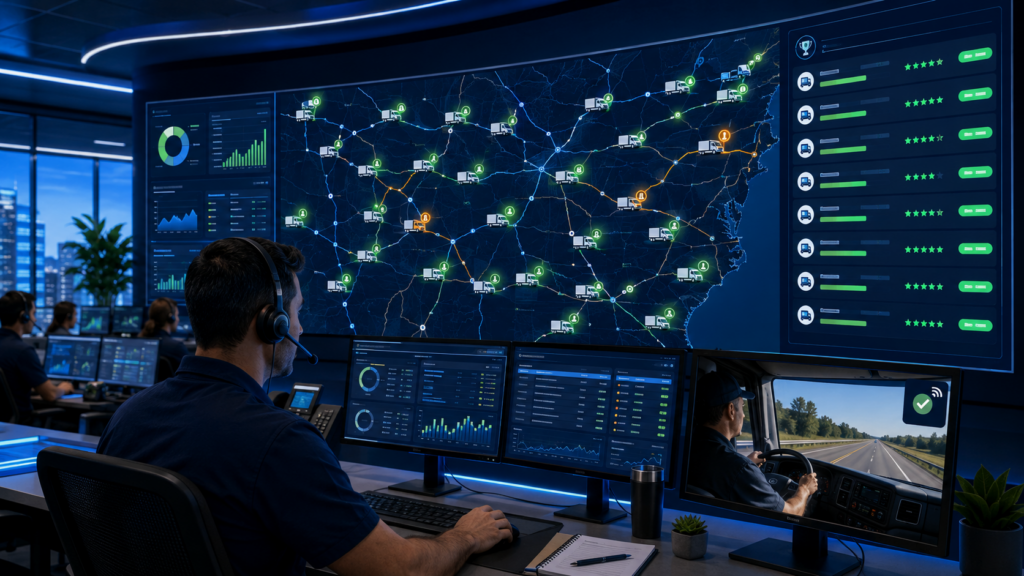
The shift from check-calls to automated tracking changes the carrier experience in one specific and meaningful way: it removes repeated interruptions from a workday that is already full of them. A driver who grants a one-time app permission or connects through an ELD integration is not interrupted again for routine status updates. The system captures position data continuously. If there is an exception, the dispatcher calls with a purpose, not just to confirm the truck is still moving.
That shift matters more than most brokers realize. A driver who receives five interruption-free loads from a broker in a row has a meaningfully different relationship with that broker than one who has fielded 15 check-calls across the same loads. The freight did not change. The relationship did.
Furthermore, automated tracking produces documentation that manual check-calls never generate reliably. Every position ping is recorded. Pickup and delivery timestamps are captured automatically. If a shipper disputes a detention claim or questions an ETA, the tracking record provides the evidence. A manual check-call log, if it exists at all, is a series of dispatcher notes that reflect what a driver said at the time of the call, which is not the same as a continuous GPS-verified position history.
The Broker Who Builds Carrier Relationships Through Technology
The practical way to use automated tracking as a carrier relationship tool is to make the value visible to the carrier before the first load moves. A brief onboarding that explains how the tracking works, what the carrier is expected to do (typically, one app permission or an ELD connection), and what the carrier will not have to do (answer routine status calls) sets an expectation that the relationship will be operationally lighter than the alternatives.
- Use a platform that supports ELD integrations. A carrier who already has an ELD mandate can share position data through an integration without a driver doing anything differently. No new app. No additional permission steps. The data flows automatically.
- Automate shipper notifications at key milestones. When a pickup confirmation and en route update reach the shipper automatically, the dispatcher does not need to relay them manually. The shipper gets better service and the carrier’s driver is not interrupted to enable it.
- Reserve calls for actual exceptions. When a dispatcher calls a carrier, it should be because something requires a decision, not because a check-call is on the schedule. A carrier who knows that calls from a particular broker always mean something real needs attention will answer those calls faster than a carrier who has learned that most calls are routine.
- Share tracking data proactively with carriers as well as shippers. Some brokers send carriers a visibility link for their own loads. It gives the carrier visibility into the same data the shipper sees, which builds confidence that the information being reported is accurate and current.
Carrier Relationships Are Built on What You Do Not Ask Them to Do
The carriers who show up consistently for a broker’s freight are not doing it because of the rate alone. Rate matters, but experienced carriers know that the total cost of a broker relationship includes communication overhead, documentation requirements, and the operational friction of being checked up on repeatedly. Manual load tracking adds that friction to every load. Automated tracking removes it.
A broker who can honestly tell a carrier that their drivers will not receive routine status calls, that shipper updates go out automatically, and that the tracking record handles documentation without additional work from the carrier’s side, is offering something the check-call competition is not. That is a competitive advantage in carrier relationship management that costs less to implement than it costs to ignore.
Therefore, the question is not whether automated tracking is worth deploying. It is how many loads you have moved since the last time you asked a driver the same question their ELD was already answering.
Stop calling. Start tracking.
FTM’s automated load tracking connects ELD data, driver apps, and shipper visibility into one live view, so your dispatchers focus on exceptions and your carriers stop dreading your number on their screen. Built for brokers and carriers who are serious about the relationships that keep freight moving.
Book Your Free FTM Demo