In logistics, small delays rarely stay small.
On this page
A missed update turns into a detention fee. A disconnected system causes a dispatch error. A driver waits for instructions because data lives in five different places. Over time, operational friction compounds into lost revenue, slower service, and frustrated teams.
Many logistics teams accept operational friction as normal.
In many cases, outdated systems are the real cause.
If your logistics software slowing you down has become the norm, your operation may already be losing time, visibility, and profit without realizing how much.
Modern transportation teams need software that moves at the same speed as the supply chain itself. Static systems and manual workflows can no longer keep up with rising shipment volume, customer expectations, and real-time operational demands.
How Logistics Software Slowing You Down Hurts Operations
Why Small Delays Compound Quickly
Legacy logistics platforms often create inefficiencies quietly.
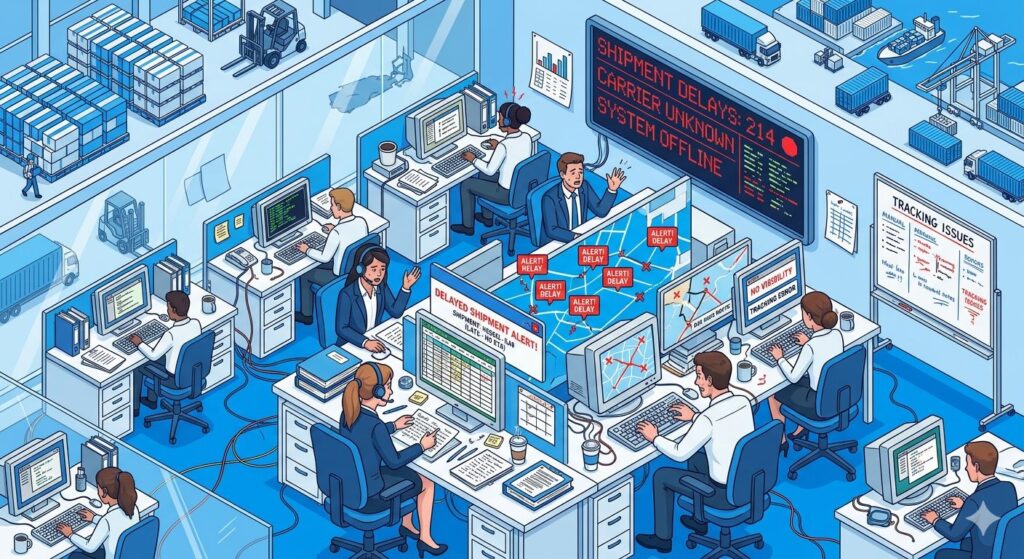
At first, the issues seem manageable. Dispatchers manually update spreadsheets. Customer service teams chase ETAs through phone calls. Operations staff switch between carrier portals to piece together shipment visibility.
Then scale enters the picture.
As freight volume grows, those manual processes start slowing the entire operation down.
Some of the most common warning signs include:
- Delayed shipment updates
- Frequent manual data entry
- Poor integration between systems
- Slow dispatch workflows
- Inconsistent carrier communication
- Limited real-time visibility
- Reactive exception handling instead of proactive alerts
These issues reduce operational speed while increasing the likelihood of costly mistakes.
Modern logistics depends on real-time coordination across carriers, brokers, warehouses, and customers.
When systems cannot support that level of visibility, teams spend more time reacting than preventing problems.
Read more: Why Most Logistics Companies Fail Without a TMS
How Modern TMS Platforms Improve Supply Chain Efficiency
Centralized Logistics Operations Create Faster Decisions
Modern transportation management systems are designed to remove operational bottlenecks before they disrupt the flow of freight.
Instead of relying on disconnected tools and manual communication, a modern TMS centralizes logistics workflows into a single connected environment.
This allows operations teams to:
- Track shipments in real time
- Automate repetitive dispatch tasks
- Improve routing decisions
- Detect delays earlier
- Reduce empty miles
- Coordinate carriers more efficiently
- Access live performance analytics
Why Unified Visibility Matters
The biggest difference is speed.
When dispatchers, brokers, and managers work from one platform, decisions happen faster and with better accuracy.
Teams spend less time chasing updates and correcting avoidable mistakes.
Companies using advanced TMS platforms often see improvements in:
| Operational Area | Impact of Modern TMS |
| Dispatch Efficiency | Faster load assignment and scheduling |
| Visibility | Real-time shipment tracking |
| Cost Control | Reduced fuel waste and detention fees |
| Customer Service | More accurate ETAs and communication |
| Scalability | Easier growth without operational chaos |
Modern systems also improve collaboration across departments. Instead of siloed communication, everyone works from the same operational timeline.
That clarity becomes critical during disruptions.
Read more: What You Should Expect From Your TMS in 2026
Why Reactive Logistics Operations Fall Behind
Reactive Workflows Drain Operational Speed
One of the clearest signs of logistics software slowing you down is constant firefighting.
Teams spend their day reacting to problems after they happen:
- Drivers call in late
- Customers request updates manually
- Loads sit without visibility
- Exceptions go unnoticed until escalation
Reactive operations create constant pressure.
Teams never gain enough visibility to stay ahead of disruptions.
Predictive Logistics Creates Operational Stability
Modern logistics software changes this dynamic through proactive workflows.
For example, predictive ETA tracking can identify late shipments before delivery windows are missed. Automated alerts can flag stalled freight instantly. AI-assisted routing can recommend faster alternatives based on traffic and live conditions.
These tools allow operations teams to make decisions earlier, when problems are still manageable.
The result is a calmer operation with fewer surprises.
Companies that modernize their logistics infrastructure are not simply adding software. They are creating faster operational response systems that scale more effectively under pressure.
Read more: Driver Shortage Pressure: What Carriers Should Expect
The Technology Gap Is Becoming a Competitive Gap
Modern Logistics Runs on Real-Time Data
The logistics industry is becoming increasingly data-driven.
Shippers expect visibility. Customers expect accurate ETAs. Carriers expect smoother communication. Leadership teams expect operational analytics in real time.
Companies still relying on outdated workflows are finding it harder to compete against organizations using connected, AI-assisted transportation systems.
This gap affects more than efficiency.
It affects:
- Customer retention
- Carrier relationships
- Profit margins
- Scalability
- Service reliability
Technology is no longer a back-office support tool. It directly shapes operational performance.
Businesses that modernize early gain faster decision-making, stronger visibility, and better adaptability during disruptions.
Those advantages compound over time.
How FTM Helps Logistics Teams Move Faster
FTM was built for logistics teams that need speed, visibility, and operational control without unnecessary complexity.
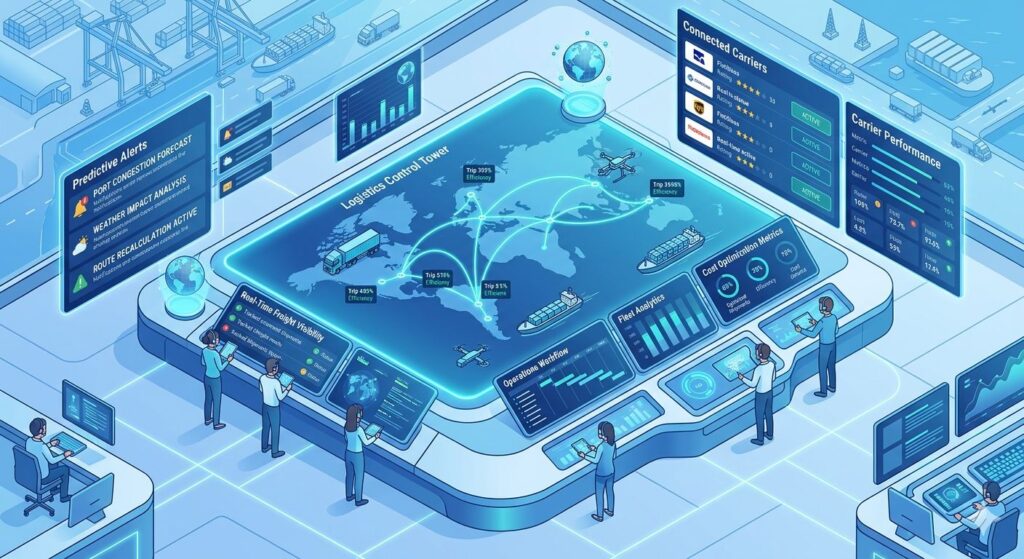
Instead of forcing teams to manage freight across disconnected systems, FTM centralizes dispatching, tracking, communication, and exception management into one unified platform.
Operations teams can monitor shipments in real time, automate repetitive workflows, and identify disruptions earlier before they impact customers or margins.
With FTM, logistics teams can:
- Reduce manual coordination work
- Improve shipment visibility
- Streamline dispatch operations
- Automate exception alerts
- Optimize routing decisions
- Scale operations with greater consistency
The goal is simple: help logistics teams spend less time reacting and more time operating efficiently.
If your current system feels slower than your operation demands, it may be time to evaluate whether your software is helping your team move forward or quietly holding it back.
