A carrier can maintain its DOT authority, insurance, and safety compliance and still fall short of what a cross-border shipper expects from a transportation partner.
On this page
For freight moving between the United States, Canada, and Mexico, cargo security introduces another set of questions: Who inspects the trailer? How does the carrier control seals? Can dispatch identify an unauthorized route change? What happens if someone discovers evidence of tampering?
CTPAT certification gives eligible carriers a formal way to demonstrate that they manage these risks.
The program offers potential customs-processing advantages, but qualification requires more than submitting company information. Carriers must establish security procedures, assess vulnerabilities, and show U.S. Customs and Border Protection (CBP) that employees follow them.
What Is CTPAT Certification?
The Customs Trade Partnership Against Terrorism (CTPAT) is a voluntary supply chain security program administered by CBP.
Participating businesses agree to identify security risks and implement safeguards that protect international cargo movements.
For highway carriers, that includes vehicle inspections, trailer and seal security, personnel controls, business partner screening, cybersecurity, and procedures for responding to suspicious activity.
CBP treats certified partners as lower-risk participants in international trade. As a result, they may receive less frequent examinations and other cargo-processing benefits.
Importantly, CTPAT does not replace normal customs requirements, highway safety regulations, or carrier operating authority.
Which Trucking Companies Qualify for CTPAT?
The first eligibility question is whether the company operates qualifying international highway freight.
According to CBP’s published highway carrier criteria, applicants must generally meet these conditions:
- Operate as an active U.S.–Canada or U.S.–Mexico international border-crossing highway carrier.
- Maintain a staffed business office in the United States, Canada, or Mexico.
- Hold the required active Standard Carrier Alpha Code (SCAC) and U.S. DOT number.
- Designate a company officer responsible for cargo security.
- Commit to the applicable CTPAT minimum security criteria.
- Submit a supply chain security profile explaining how the company meets those criteria.
CBP also has a separate eligibility category for Mexican long-haul carriers, so businesses should select the correct operating category rather than assuming all trucking companies use one application.
What if a carrier only operates domestically?
A U.S. carrier that exclusively moves freight between domestic facilities would not normally qualify under the international highway carrier category.
However, that company can still adopt CTPAT-style security controls if its customers require stronger carrier vetting, cargo protection, or documented handling procedures.
For fleets planning to enter cross-border service, reviewing eligibility before investing in a certification project can prevent unnecessary work.
What Does CBP Actually Expect Carriers to Secure?
The strongest applications explain how security operates during a normal freight movement, not merely what appears in a company policy manual.
CBP’s published Minimum Security Criteria for Highway Carriers provide the detailed framework. Four operational areas deserve particular attention.
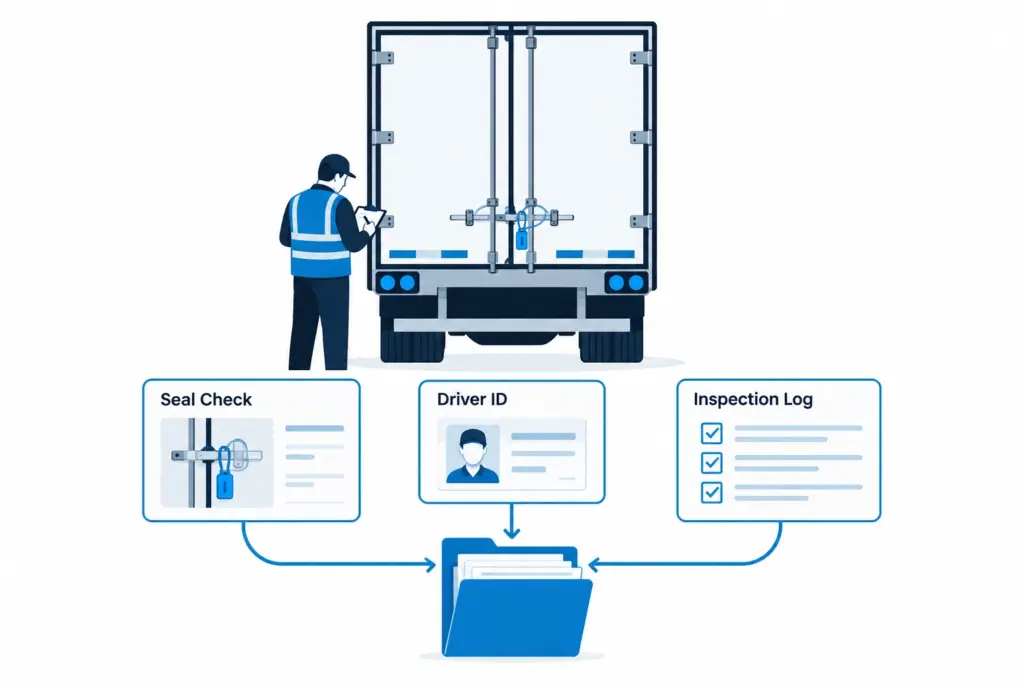
Trailer inspections and seal control
A written inspection checklist has limited value if drivers cannot explain when they perform inspections or what happens after they find a discrepancy.
Carriers need consistent procedures for examining equipment, protecting cargo, controlling high-security seals where applicable, and reporting tampering.
Records should connect inspections and seal activity to the relevant shipment, vehicle, and person responsible.
Driver and business partner security
Security extends beyond the truck.
A carrier needs appropriate personnel screening procedures, identification controls, security awareness training, and a risk-based approach to evaluating relevant business partners.
For subcontracted or third-party transportation, this creates an additional obligation: understand who actually handles the freight and what controls that party follows.
Route integrity and incident reporting
Dispatch should know how to respond when a driver reports a broken seal, unexpected stop, suspicious approach, cargo discrepancy, or unauthorized change.
The critical issue is not simply recording the event. The business needs a defined escalation process that identifies who investigates, which records to preserve, and when authorities or customers must receive notice.
Cybersecurity and access
Cargo security now depends partly on digital systems.
For example, compromised user credentials can expose shipment details or allow an unauthorized person to interfere with operating information.
Therefore, companies should review account permissions, employee access changes, authentication, security training, and incident response as part of the broader CTPAT program.
These areas reflect the official minimum security criteria; carriers should use the full CBP document rather than treating this summary as an exhaustive compliance checklist.
How to Apply for CTPAT Certification
CBP does not charge an application or membership fee. Carriers can apply directly without hiring a consultant. However, preparing the security program may involve training, equipment, process changes, and employee time.
The application process has five main stages.
1. Complete a security risk assessment
Start by reviewing facilities, routes, equipment handling, business partners, and potential security weaknesses.
A useful assessment identifies the risk, its likelihood, existing safeguards, and the person responsible for corrective action.
For instance, a fleet may have a trailer inspection policy but no consistent record of completed inspections. That gap needs attention before the company presents its procedures to CBP.
2. Prepare the security profile
Use the appropriate carrier Minimum Security Criteria to document existing practices. The profile should describe what the organization actually does, including how it trains employees, monitors procedures, and handles exceptions.
If a process exists only on paper, improve it before applying.
3. Submit the application through CBP
Register through the official CBP CTPAT program page and follow the link to the CTPAT Portal.
The application includes business details and a security profile. CBP then assigns a Supply Chain Security Specialist (SCSS) to review the submission and guide the applicant.
4. Complete certification review
CBP states that it has up to 90 days to certify or reject an application following satisfactory completion of the required submission.
This is CBP’s review window, not a guarantee that an unprepared carrier can complete the entire project in 90 days.
5. Prepare for on-site validation
Certification is not the end of the process.
CBP normally validates the carrier within one year of certification. During validation, officials assess whether documented security procedures work in practice.
The process distinguishes initial Tier I certification from Tier II validated status. Validation can affect the benefits available to the company.
What Does CTPAT Certification Actually Get You?
For carriers, the most valuable benefits generally fall into border operations and commercial positioning.
| Benefit | Practical Value | Important Limitation |
|---|---|---|
| Fewer CBP examinations | Potentially fewer cargo interruptions | Inspections can still occur |
| Inspection priority | More favorable processing during eligible examinations | Does not provide inspection immunity |
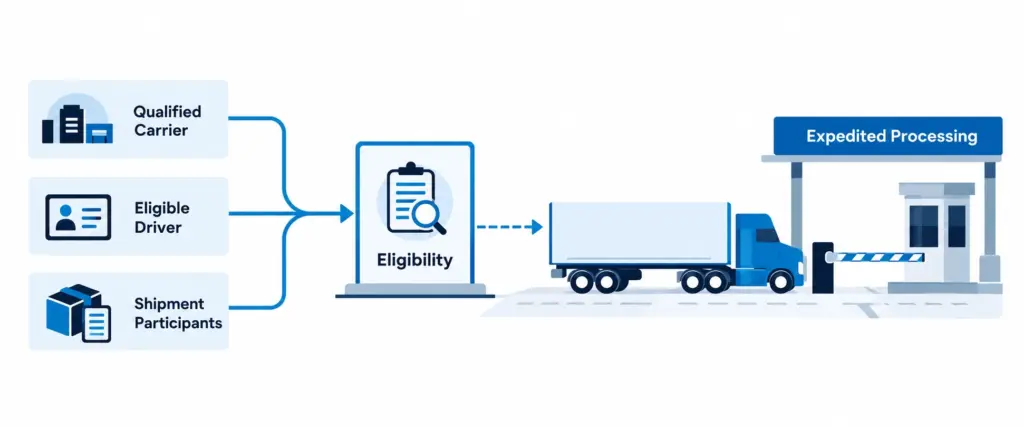
| FAST lane eligibility | Potential expedited land-border processing | Additional FAST conditions apply |
| CBP security specialist | Guidance and security program feedback | Internal management remains responsible |
| Shipper qualification | May support security-related customer requirements | Does not guarantee new freight contracts |
CBP explicitly identifies reduced examinations, front-of-line inspections, FAST lane access, and dedicated security specialist support among program benefits.
FAST lanes are not automatic
This distinction deserves attention before a carrier builds its business case.
CTPAT membership alone does not mean every truck can enter a dedicated FAST lane. CBP describes FAST participation as requiring eligible participants throughout the relevant supply chain, including the driver and other parties.
Availability also depends on the border crossing and shipment circumstances.
Consequently, the right question is not simply whether a carrier has CTPAT certification. It is whether its actual freight, drivers, trading partners, and border lanes qualify for FAST processing.
Review CBP’s FAST program guidance before incorporating expedited processing into delivery commitments.
Is CTPAT Certification Worth It for Your Fleet?
A carrier making frequent international crossings has a different business case from a fleet handling occasional cross-border freight.
Consider three operational questions before committing resources.
How much exposure does your operation have to border delays? Look at actual crossing frequency, inspection history, detention costs, and missed appointment consequences. Then estimate the potential value of improved processing without assuming a fixed reduction.
Do existing or prospective customers value certification? Check shipper contracts, transportation bid requirements, and customer onboarding questionnaires. A specific requirement carries more weight than assuming certification will automatically generate new business.
Can your security program remain effective after the application? Initial preparation is only part of the expense. Carriers need to maintain training, security documentation, inspections, corrective actions, and program oversight.
A practical decision is easier when commercial and operational teams examine these questions together.
Maintaining Certification Requires Daily Operational Discipline
One overlooked part of CTPAT is the obligation to maintain the practices that supported certification.
CBP’s Portal guidance requires partners to review their security profile at least annually. The agency can also validate operating practices and identify corrective actions.
For carriers, the challenge often lies in connecting office policies to what happens on the road.
A driver reports damage to a trailer seal. Dispatch receives the report, but the information stays in a text message. By the time management investigates, the next load has already begun.
That type of information gap makes security procedures difficult to verify.
A more controlled process preserves the event, supporting photographs, shipment reference, responsible employees, and resolution in one accessible record.
Similarly, fleet managers should periodically review driver training, access privileges, partner screening, and security incidents rather than waiting for the next formal assessment.
CTPAT certification remains the carrier’s responsibility, even when transportation software helps organize the evidence.
Where Transportation Software Can Help
A TMS cannot certify a carrier or substitute for CBP validation. Still, connected operating records make certain security and documentation procedures easier to manage.
For example, FTM’s Carrier & Driver App lets drivers submit shipment events, photos, signatures, and exception reports directly to the associated load record.
That can support operational evidence collection when a carrier configures its processes appropriately.
Likewise, FTM’s carrier transportation platform brings dispatch, driver activity, documents, and reporting together instead of leaving each department to maintain separate shipment histories.
For organizations working with outside carriers, FTM Carrier Onboarding supports document collection, verification, internal review, and approval workflows.
These features can assist a security program, but they do not constitute built-in CTPAT certification or guarantee compliance with CBP’s Minimum Security Criteria.
The broader lesson applies beyond any particular system: security evidence is easier to maintain when employees record events as they happen.
Before You Apply, Check These Five Things
A carrier considering CTPAT certification should be able to answer the following:
- Eligibility: Does the company qualify for the correct CBP highway carrier category?
- Ownership: Is a senior company officer accountable for supply chain security?
- Procedures: Can employees demonstrate inspections, seal control, training, and incident response?
- Evidence: Are records sufficiently complete to support CBP’s review and validation?
- Commercial value: Does the expected benefit justify the ongoing security investment?
Missing answers do not necessarily mean certification is unattainable. They identify the work that should happen before submitting the application.
The Bottom Line
CTPAT certification can provide meaningful advantages for eligible cross-border carriers, particularly those operating regularly through U.S. land ports and working with security-conscious shippers.
However, the program demands more than a completed application.
Carriers must demonstrate that they understand supply chain risks, maintain workable controls, and can support their security claims with evidence.
For a fleet already investing in secure cross-border transportation, certification may strengthen an existing operation. For others, a thorough eligibility and cost-benefit review should come first.
Frequently Asked Questions
Keep Carrier Operations and Documentation Connected
FTM connects dispatch, driver-reported events, shipment documents, and operational reporting inside Salesforce, helping teams manage freight with clearer records and fewer disconnected handoffs.
Explore FTM for Carriers