A carrier accepts a load, but a different trucking company arrives for pickup. The broker never approved the change, and the driver has paperwork showing another company arranged the shipment.
On this page
That situation raises an immediate question: who actually has authority to move the freight?
People sometimes call this dual brokerage, although double brokering is the more common industry term for passing a load to another party after accepting it.
The legal distinction matters. Companies can hold both broker and carrier authority. Problems arise when a party arranges transportation without the required authority, conceals a load transfer, or misrepresents who will transport the shipment.
Freight brokers need clear rules for carrier approval, load reassignment, and identity verification before releasing cargo.
Dual brokerage vs. double brokering: Know the difference
Three arrangements frequently get confused.
Dual authority means a company holds both motor carrier and freight broker authority. It can operate trucks under its carrier authority and arrange transportation under its broker authority, provided it meets the requirements for each activity.
FMCSA confirms that carriers brokering freight, even occasionally, generally need separate broker registration.
Co-brokering involves two authorized brokers working together to arrange freight transportation. It can be lawful, subject to the applicable agreements and regulatory requirements.
Double brokering describes a load passing through an additional party, often without the original broker or shipper knowing. FMCSA does not define the phrase as a separate statutory offense. Its legality depends on what the parties actually do and whether they have the necessary authority.
For instance, a carrier with valid broker authority may arrange freight under a properly authorized brokerage agreement. That differs from a trucking company secretly passing a load to another carrier while claiming it will perform the transportation itself.
The distinction determines whether the arrangement is permissible, contractually prohibited, or potentially unlawful.
| Arrangement | Legal Position | What to Verify |
|---|---|---|
| Dual authority | Permitted when the business holds and uses the required authorities correctly | Carrier authority, broker authority, and the role used for the shipment |
| Co-brokering | Can be lawful between authorized brokers, subject to applicable agreements | Both broker registrations and permission under relevant contracts |
| Unauthorized rebrokering | May violate federal brokerage requirements, contracts, or laws against misrepresentation and fraud | Actual transporting carrier, authorization, and who arranged the transfer |
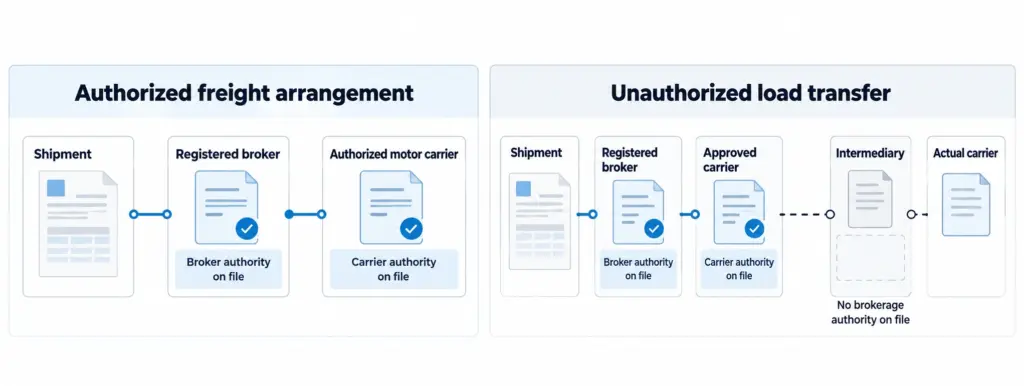
Why unauthorized double brokering is illegal
Under 49 U.S.C. § 14916, a person providing interstate brokerage services generally must hold the required broker registration and satisfy federal financial security requirements.
Motor carrier authority alone does not authorize a company to operate as an independent freight broker.
Furthermore, 49 CFR § 371.7 prohibits a broker from misrepresenting its brokerage operations as those of a motor carrier.
This becomes relevant when a business accepts a shipment under one role but uses another entity to arrange transportation without properly identifying the relationship.
A separate problem arises when the original shipper or broker agreement prohibits rebrokering. Even a company with valid broker authority may breach its contract by transferring the shipment without permission.
Therefore, a hidden load transfer can create several different exposures:
- Unauthorized brokerage when the intermediary lacks the required authority.
- Contract disputes when the shipper or original broker prohibited reassignment.
- Misrepresentation or fraud claims when parties use false identities or deliberately conceal material information.
- Payment, insurance, and cargo liability disputes involving the actual transporting carrier.
Federal law does not impose a blanket ban on every transaction involving two brokers. The authorization, contracts, and conduct of the parties determine the legal consequences.
How fraudulent double brokering happens
Consider a typical fraudulent arrangement.
A broker awards a load to Carrier A after checking its operating authority and insurance. Carrier A then advertises the shipment again, sometimes using another identity or presenting itself as an authorized broker.
Carrier B accepts the second offer and moves the freight.
The original broker still believes Carrier A has the shipment. Meanwhile, Carrier B may believe it has a valid agreement with the intermediary.
Once delivery is complete, the original broker pays Carrier A. If Carrier A disappears without paying Carrier B, the actual transporting carrier may pursue the payment it never received.
The consequences can extend beyond unpaid freight charges.
If cargo disappears or arrives damaged, the parties must establish who accepted responsibility, whose insurance applies, and which agreements govern the shipment.
The Transportation Intermediaries Association’s fraud guidance describes this type of unauthorized load transfer and the associated payment risks.
Warning signs brokers should investigate
No single warning sign proves that a carrier is double brokering. Nevertheless, several discrepancies deserve investigation before dispatch.
Carrier information changes unexpectedly. A new dispatcher, unfamiliar email domain, or revised phone number may be legitimate. However, changes immediately before pickup warrant independent confirmation.
The driver cannot identify the approved carrier. A different company name on the truck or BOL may indicate an unauthorized transfer. Leased equipment and authorized operating arrangements can also explain differences, so verify the underlying authority before reaching a conclusion.
Tracking and pickup information do not match. Repeated changes to driver details, refusal to provide reasonable shipment visibility, or conflicting pickup instructions create unnecessary uncertainty about custody.
Payment instructions become unusual. A sudden factoring change, unexplained account change, or request for immediate payment to an unfamiliar party deserves separate verification.
FMCSA’s broker and carrier fraud advisory specifically recommends verifying contact information through its official records rather than relying on numbers supplied during a suspicious transaction.
For a broader explanation of identity theft and stolen carrier credentials, see our article on freight fraud detection.
How to prevent double brokering before pickup
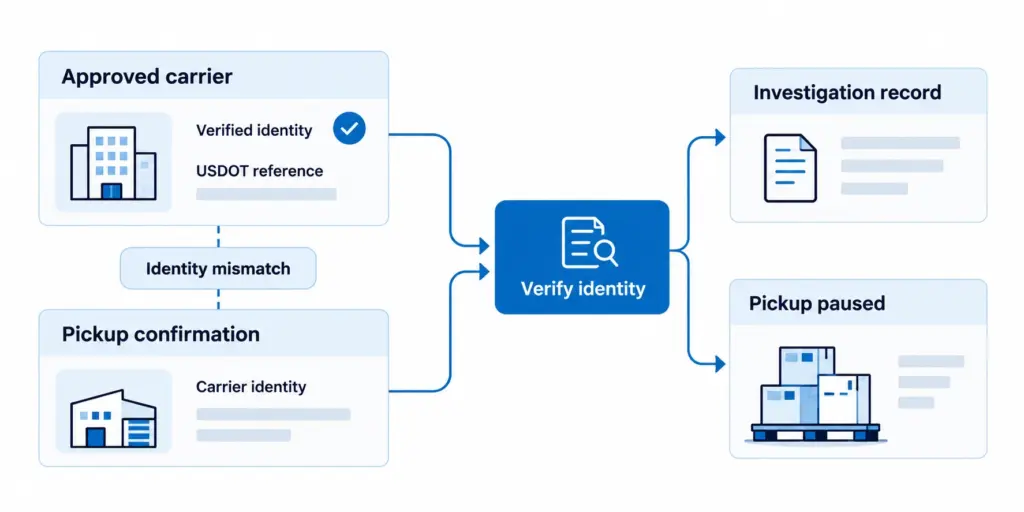
A workable prevention process needs controls at carrier onboarding, load assignment, and pickup. Screening a company once does not establish who will actually collect every shipment.
Verify authority and identity independently
Check the carrier’s legal name, USDOT number, operating authority, and available contact details through FMCSA SAFER and other official registration resources.
If a dispatcher contacts you from a new address or number, confirm the change through an independently verified company contact.
For higher-risk assignments, review identity, insurance, and compliance information before issuing the rate confirmation.
FTM’s Highway integration connects carrier identity verification, authority information, insurance status, and fraud signals to the carrier record used during load assignment.
Put reassignment rules in writing
Carrier agreements should establish whether a carrier may subcontract or rebroker freight and under what conditions.
For loads requiring direct performance, specify that the approved carrier must obtain written authorization before transferring transportation responsibilities.
The rate confirmation should identify the intended carrier and relevant operating details. Together with the carrier agreement, it provides a reference when pickup information changes.
Have transportation counsel review these provisions rather than relying on a generic prohibition copied from another contract.
Confirm the actual carrier at pickup
Before releasing sensitive or high-value freight, verify that the arriving driver’s operating authority matches the approved transportation arrangement.
Where necessary, ask the shipping facility to confirm the USDOT number displayed on the power unit and report discrepancies.
A leased truck, owner-operator, or different trailer does not automatically indicate fraud. The important question is whether the transportation arrangement is legitimate and properly authorized.
Monitor changes after tender acceptance
The initial carrier check should remain connected to active operations.
If dispatch receives a different driver number, unexpected pickup instruction, or unexplained change in shipment custody, an employee should review the discrepancy before allowing the load to proceed.
FTM’s Dispatch Console connects carrier assignments, tracking events, documents, and shipment exceptions to the same load record.
Meanwhile, a controlled private loadboard lets teams offer freight to an approved carrier network instead of exposing every shipment to an unrestricted pool.
These tools support verification and accountability, although they cannot guarantee that fraud will never occur.
What to do if a load has already been double brokered
The response depends on where the shipment is and whether the parties can establish who has physical custody.
First, verify the transporting carrier. Contact the actual driver or carrier through independently confirmed information. Establish the truck’s location, the shipment’s status, and the instructions the driver received.
Preserve the original rate confirmation, BOL, tender history, messages, identity checks, tracking records, and any conflicting documents.
Next, inform the shipper and involve the appropriate operations, insurance, and legal contacts. If the freight is still moving, prioritize its safe delivery and avoid issuing conflicting instructions to the driver.
A second carrier may also be an innocent party. FMCSA specifically warns that the original broker and the actual transporting carrier can both be victims of the same fraudulent intermediary.
For suspected unauthorized brokerage, report the incident through the FMCSA Complaint Center. Identity theft or suspected criminal fraud may also warrant contacting law enforcement or the appropriate federal reporting agency.
Finally, review payment obligations before releasing funds or agreeing to a second payment. The applicable contracts and facts determine how those disputes should be handled.
How FTM supports carrier fraud prevention
Freight fraud prevention works better when carrier approval and shipment execution share the same information.
FTM’s carrier onboarding workflow collects carrier documents, records compliance checks, and supports approval decisions before activation.
Those records remain available when dispatch selects a carrier. Subsequently, shipment activity, documentation, and exceptions can stay connected to the original assignment.
For brokerage teams managing frequent spot freight, the FTM broker platform brings carrier qualification, sourcing, dispatch, and operational reporting into Salesforce.
It cannot replace independent verification or legal review. However, consistent records make it easier to identify an unapproved change and investigate the people involved.
The bottom line
Double brokering becomes particularly dangerous when transportation changes hands without the shipper or original broker knowing.
The best protection combines independent carrier verification, clear contractual authority, documented pickup checks, and prompt investigation of unexplained changes.
Companies with dual broker and carrier authority can operate legally. What matters is whether every participant acts under the correct authority and follows the agreed transportation arrangement.
For freight brokers, that means knowing which company was approved, which company actually collected the freight, and who is responsible for delivery and payment.
Frequently Asked Questions
No. Double brokering is an industry term rather than a separately defined federal offense. Rebrokering may be lawful when participants have the required authority and permission. Unauthorized brokerage, misrepresentation, and fraudulent transactions can violate applicable laws or contracts.
Yes. A company can maintain both authorities. However, brokering freight generally requires separate FMCSA broker registration and applicable financial security. The company must comply with the requirements governing each activity.
No. Fraudsters can impersonate carriers with genuine operating authority. Brokers should independently confirm company contacts, authority details, and the identity of the transporting party before releasing freight.
Under 49 CFR 371.3, freight brokers must generally retain the required transaction records for three years. These records include shipment details, carrier identification, brokerage compensation, and relevant freight payment information.
Verify the carrier’s identity and preserve shipment, contract, and payment records. Payment to the intermediary may not resolve every obligation. Review the situation with transportation counsel and the relevant parties before making another payment.
Know Who Is Carrying Your Freight
FTM connects carrier verification, compliance records, approval workflows, and load assignments in Salesforce, helping brokerage teams investigate risks before freight moves.
Explore FTM Carrier Onboarding