To improve tender acceptance rates, transportation teams need to understand why carriers decline freight, then correct the conditions they can control. Better lane fit, realistic rates, accurate load details, sufficient lead time, current capacity data, and faster response workflows can all reduce avoidable rejections.
On this page
The goal is not to make carriers accept every tender. Instead, brokers, shippers, and carriers should create a repeatable process that sends suitable freight to suitable capacity and records why each offer was accepted, rejected, or left unanswered.
What Is Tender Acceptance Rate?
Tender acceptance rate measures how often a carrier accepts eligible freight offered by a broker, shipper, or transportation team. It helps teams evaluate whether offered freight aligns with carrier capacity, rates, equipment, lanes, and operating requirements.
A basic formula is:
Tender acceptance rate = accepted eligible tenders ÷ eligible tenders offered × 100
Before using the result, define what qualifies as an eligible tender. For example, teams may need to exclude duplicate offers, canceled loads, test records, tenders withdrawn before the response deadline, or offers sent after capacity was already committed.
Tender Acceptance Rate vs Tender Response Rate
Acceptance rate and response rate answer different questions:
- Acceptance rate measures the percentage of eligible tenders accepted.
- Response rate measures the percentage of eligible tenders that received any response, including acceptance or rejection.
- Response time measures how long it took the carrier to accept or decline.
A carrier may have a high response rate but a low acceptance rate. That pattern suggests the carrier is reviewing offers but finding a recurring mismatch. A low response rate may indicate contact, workflow, notification, or carrier-engagement problems.
Why Carriers Reject Freight Tenders
Transportation teams cannot improve tender acceptance rates until they capture consistent rejection reasons. Free-text notes can help, but standardized reason codes make trends easier to compare.
| Common Rejection Cause | What to Review | Possible Corrective Action | Useful Data |
|---|---|---|---|
| Rate mismatch | Contract, spot, fuel, accessorial, and lane assumptions | Review pricing inputs and define approval rules | Offered rate, accepted rate, final cost, reason code |
| No available capacity | Truck, driver, equipment, and existing commitments | Use more current capacity data and avoid duplicate offers | Equipment status, driver availability, committed loads |
| Poor lane fit | Origin, destination, backhaul, deadhead, and operating region | Prioritize carriers with demonstrated lane alignment | Operating lanes, previous loads, empty miles |
| Insufficient lead time | Time between tender, pickup, and appointment | Send suitable tenders earlier when possible | Tender time, response time, pickup window |
| Equipment mismatch | Trailer, dimensions, weight, commodity, and special requirements | Validate requirements before distribution | Equipment type, dimensions, weight, restrictions |
| Appointment or facility constraint | Operating hours, dwell history, access rules, and delivery window | Share complete facility information before response | Appointment, facility notes, historical dwell |
| Incomplete load details | Missing addresses, dates, references, commodity, or instructions | Require critical fields before sending the tender | Validation status and missing-field history |
Rejection reasons should describe the actual cause. Avoid using a generic “carrier declined” status when more specific information is available.
How to Improve Tender Acceptance Rates
1. Segment Acceptance by Lane and Equipment
A network-wide average can hide strong and weak matches. Break acceptance down by origin, destination, equipment, commodity, customer, facility, pickup day, and lead time. Then identify which carriers already accept and perform reliably within each segment.
This approach helps teams send fewer poorly matched tenders and gives carrier managers a clearer basis for preferred-carrier decisions.
2. Review Rate and Accessorial Alignment
Review whether repeated rejections cluster around specific lanes, facilities, fuel assumptions, payment terms, or accessorial rules. If the operating requirements changed while the commercial terms stayed fixed, rejection data may reveal that gap.
Keep the offered rate, final accepted rate, and final carrier cost separate. This makes it easier to distinguish tender rejection from later cost variance.
3. Improve Load-Data Completeness
Carriers need enough information to evaluate freight. Validate critical details before distribution, including locations, dates, appointment windows, mode, equipment, weight, commodity, handling requirements, references, and contact instructions.
Incomplete data slows decisions and can create avoidable back-and-forth. It can also produce acceptance followed by cancellation if the missing requirement changes the carrier’s ability to serve the load.
4. Increase Tender Lead Time Where Possible
Short lead times restrict available capacity and reduce the time carriers have to verify drivers, equipment, routes, and appointments. Measure acceptance by lead-time band so the operation can see where late tendering creates avoidable declines.
5. Keep Capacity and Operating-Lane Data Current
Capacity information loses value quickly. Review truck, equipment, driver, operating-lane, and existing-load data before using it to prioritize a carrier. Capacity rules should also respect legal operating constraints, including applicable FMCSA hours-of-service requirements.
6. Use Clear Response Windows and Escalation Rules
Define when a tender expires, whether reminders are sent, when the offer moves to another carrier, and who handles exceptions. The response window should reflect the urgency of the load without creating unnecessary pressure or duplicate awards.
7. Review Rejections With Carriers
Use regular carrier reviews to compare acceptance by lane, rate, lead time, equipment, and reason code. The purpose is to find correctable mismatches, not to push carriers toward unsuitable freight.
What Is Freight Tender Automation?
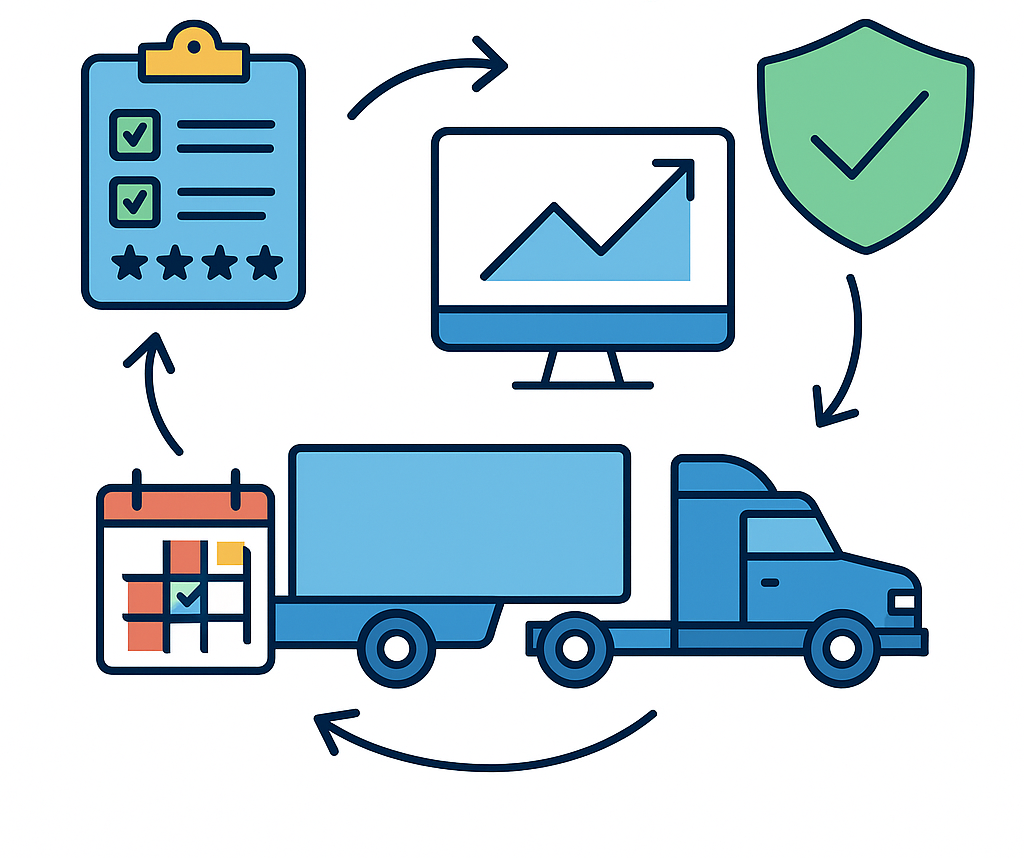
Freight tender automation uses configured rules and connected data to prepare, distribute, track, and escalate load offers. It can reduce repetitive work and shorten response cycles, but it does not correct poor rates, unsuitable lanes, missing information, or outdated capacity on its own.
A tender-automation workflow may:
- Validate required load fields before distribution
- Identify eligible carriers using approved business rules
- Send the offer through the configured carrier channel
- Record when the tender was sent, opened, accepted, rejected, or expired
- Capture standardized rejection reasons
- Send reminders within the permitted response window
- Escalate unanswered or rejected tenders according to routing rules
- Preserve the carrier-response history for reporting
How Does Freight Tender Automation Improve Acceptance Rates?
Automation can improve the process surrounding tender acceptance in four practical ways:
- Faster distribution: Suitable carriers receive offers without waiting for repetitive manual outreach.
- Better consistency: Required fields, deadlines, notifications, and escalation rules follow the same process.
- Clearer carrier selection: Rules can use approved lane, equipment, status, or relationship data to narrow the audience.
- Stronger analysis: Recorded responses and reason codes show where rates, lead time, capacity, or load requirements create rejection patterns.
However, teams should measure the result rather than assume automation caused an improvement. Compare acceptance, response time, unanswered tenders, manual touches, and rejection reasons before and after the workflow change. Keep other major changes, such as pricing or carrier-network expansion, in the analysis.
Where Tender Automation Needs Human Review
Some tenders require judgment because the freight falls outside standard rules. Examples include:
- High-value, hazardous, oversized, or temperature-controlled freight
- Unusual appointment, handling, or facility restrictions
- Missing or conflicting load information
- New carriers without enough performance history
- Rates or accessorials outside approved limits
- Capacity data that may no longer be current
- Customer-specific approval requirements
Automation should route these exceptions to the correct reviewer and preserve the decision history. It should not hide uncertainty behind a generic eligibility score.
How to Measure Tender Workflow Improvement
| Measure | Calculation | Why It Matters | Review Together With |
|---|---|---|---|
| Tender acceptance rate | Accepted eligible tenders ÷ eligible tenders offered × 100 | Shows the share of offered freight accepted | Lane, rate, lead time, equipment, reason code |
| Tender response rate | Tenders answered ÷ eligible tenders offered × 100 | Separates nonresponse from rejection | Notification method, contact, response window |
| Median response time | Median time from tender sent to accept or decline | Shows how quickly carriers make decisions | Urgency, time of day, channel, reminder rules |
| First-choice acceptance | Loads accepted by first selected carrier ÷ eligible loads tendered × 100 | Tests carrier-selection quality | Selection rules and preferred-carrier data |
| Manual touches per tender | Total manual tender actions ÷ tenders processed | Measures workflow effort | Exceptions, missing fields, escalations |
Document each metric’s source, eligibility rules, time period, and exclusions before comparing results across carriers or workflow versions.
How FTM Supports Connected Tender Workflows
FTM connects carrier, customer, load, dispatch, document, and reporting records inside Salesforce. Organizations can configure carrier-facing workflows around their operating model while keeping responses and downstream activity connected to transportation records.
- Private Loadboard: Publish selected freight to approved carriers, collect rates, transit times, and availability, and retain responses in Salesforce.
- Carrier Onboarding: Collect carrier information, documents, insurance details, agreements, signatures, and approvals before carriers enter the network.
- Carrier Transportation Platform: Connect dispatch, drivers, documents, settlements, and reporting through Salesforce records.
- Carrier Scorecards: Define how acceptance, service, tracking, documents, claims, and cost information support carrier reviews.
- Integrations: Connect relevant load-board, tracking, telematics, compliance, accounting, and transportation services based on implementation scope.
The exact tender process, selection criteria, automation, approval rules, and integrations depend on the customer’s configuration. FTM should not be presented as automatically accepting, declining, or predicting tender outcomes unless those capabilities are confirmed for the specific implementation.
Tender Acceptance Rate FAQs
Review Your Freight Tender Workflow in FTM
Bring your carrier network, tender rules, capacity data, rejection reasons, response windows, and escalation process. FTM will map how the workflow can connect with Salesforce carrier and load records.
Review Your Tender Workflow